China processes more than 1.8 million criminal cases per year. The overwhelming majority are now minor offenses — fraud, embezzlement, drunk driving, obstruction of official duties. Violent crime has declined sharply over the past decade, while economic and regulatory offenses have surged. This structural shift means a growing share of suspects and defendants simply do not warrant pretrial detention.
The math is stark: incarcerating people charged with minor crimes wastes judicial resources, produces negligible deterrence, increases cross-contamination risk between low-risk and hardened offenders, and strains public budgets that could fund rehabilitation. China’s criminal justice system — and the American system facing its own pretrial detention crisis — are both reaching the same conclusion from different directions: non-custodial supervision must scale, and technology is the only way to scale it.
But the technology question is far from settled. Smartphone-based monitoring apps, GPS ankle monitors, and wrist-worn devices each carry fundamentally different security assumptions. Getting the architecture wrong doesn’t just waste money — it creates supervision gaps that put communities at risk and erode judicial confidence in alternatives to detention.
Table of Contents
- How Is China’s Criminal Justice Reform Driving Non-Custodial Supervision?
- What Role Do Smartphone Apps Play in Non-Custodial Supervision?
- Why Does Identity Verification Determine the Entire Architecture?
- Periodic Confirmation (Low Security)
- Continuous Confirmation (High Security)
- Hybrid Confirmation (Graduated Security)
- Why Do Ankle Monitors Remain Indispensable Despite Smartphone Advances?
- Why Are Wrist-Worn Monitoring Devices a Security Liability?
- How Do China and the U.S. Compare on Non-Custodial Monitoring Architecture?
- What Comes Next for Digital Supervision in Both Systems?
How Is China’s Criminal Justice Reform Driving Non-Custodial Supervision?
China’s Community Corrections Law, enacted in December 2019 and effective July 1, 2020, formally established the legal framework for supervising offenders sentenced to public surveillance, suspended imprisonment, parole, or temporary out-of-prison service. Article 26 explicitly authorizes “communications, digital verification, and onsite inspections” as lawful supervision methods. Article 29 goes further: it permits the use of electronic positioning devices — with county-level judicial approval — for up to three months, renewable upon reassessment (National People’s Congress, 2019).
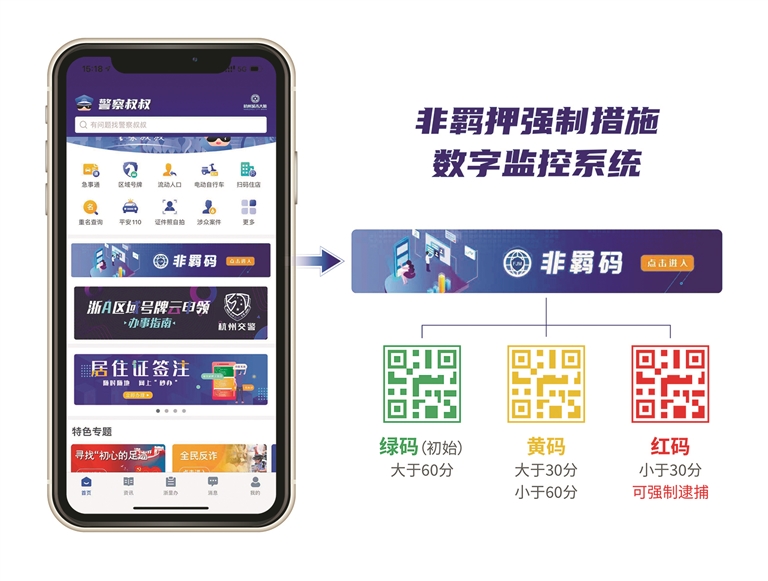
The practical implications have been dramatic. Procuratorates across China are now applying non-custodial measures to bail (qu bao hou shen, 取保候审), residential surveillance (jian shi ju zhu, 监视居住), community corrections, and even temporary prison release for family visits. In Heilongjiang’s Daqing city, the Ranghulu District Procuratorate built a “Non-Custodial Full-Process Intelligent Supervision Platform” in 2024 that integrates real-time GPS positioning, facial recognition check-ins via a WeChat mini-program (“非羁码”), and AI-powered risk assessment scoring across the entire criminal process — from investigation through prosecution, trial, and community corrections (Supreme People’s Procuratorate, February 2026). The platform was recognized as a provincial model for political-legal reform in October 2025.
Qing’an County in Suihua, Heilongjiang, reported a parallel achievement: 134 community corrections subjects monitored through a centralized “smart brain” command center using BeiDou/GPS positioning and facial recognition liveness detection, achieving zero escapes and zero recidivism for five to six consecutive years (Northeast Network, March 2026).
What Role Do Smartphone Apps Play in Non-Custodial Supervision?
Both China and the United States are converging on the same discovery: smartphones are already in people’s pockets, and building supervision capabilities on top of existing devices is orders of magnitude cheaper than issuing dedicated hardware.
In the U.S., the National Institute of Justice (NIJ) published a comprehensive review of smartphone apps for community supervision in 2025, identifying features that parallel China’s approach: remote reporting and check-ins, location monitoring, calendars and reminders, substance use management via connected sensors, and multimodal communication with supervising officers. The NIJ found that smartphone capabilities are “evolving and enabling more supervision features at a lower cost” and that “consumer markets are driving innovation, enabling more widespread use of apps for community supervision” (NIJ, 2025).
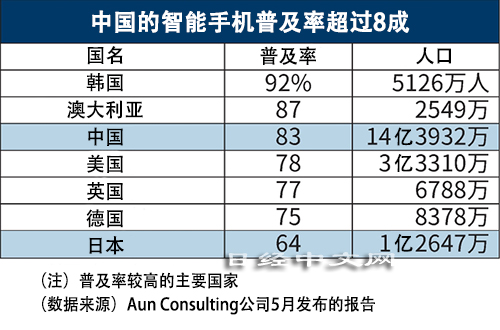
In China, smartphone penetration reached 83% (based on 1.439 billion population) as of 2021 — higher than the United States at 78% (AUN Consulting, 2021). This ubiquity is a prerequisite. The WeChat mini-program model pioneered in Daqing demonstrates a distinctly Chinese approach: rather than requiring offenders to download a separate app, supervision functions are embedded within the country’s dominant social platform, reducing technical barriers and leveraging existing user behavior.
Drake and Russo (2017), writing in The Journal of Offender Monitoring, framed the smartphone opportunity similarly for the American context: “the multifaceted power and nearly universal prevalence within society of this technology creates such a unique opportunity for its use as a supervision tool.” They noted that positive reinforcement features — catching the offender doing the right thing — may be at least as valuable as surveillance capabilities, a dimension that Chinese platforms are also beginning to integrate through compliance scoring and reward mechanisms.
Why Does Identity Verification Determine the Entire Architecture?
Here is where the technology divergence becomes consequential. A smartphone tracks the phone’s location, not the person’s. Without a physical link between the device and the individual, the entire supervision system relies on voluntary compliance — which is precisely the wrong assumption for anyone with motivation to evade.
Three identity confirmation methods have emerged across both Chinese and American practice:
Periodic Confirmation (Low Security)
This includes biometric checks — facial recognition, fingerprint, voice verification — or password authentication at scheduled intervals. China’s community corrections agencies have traditionally relied on 3–5 daily app check-ins, supplemented by manual verification via phone calls, WeChat video, or in-person spot checks.
The fundamental weakness is obvious: periodic confirmation depends entirely on the subject’s active cooperation. It cannot execute during normal sleep hours. Between check-ins, the person and the phone can separate without detection. The biometric “credentials” used — face, fingerprint, voiceprint — are the subject’s own biological features, which are inherently easy to obtain and spoof. This method is appropriate for low-risk populations where the primary goal is maintaining contact and communication, not ensuring physical custody.
Continuous Confirmation (High Security)
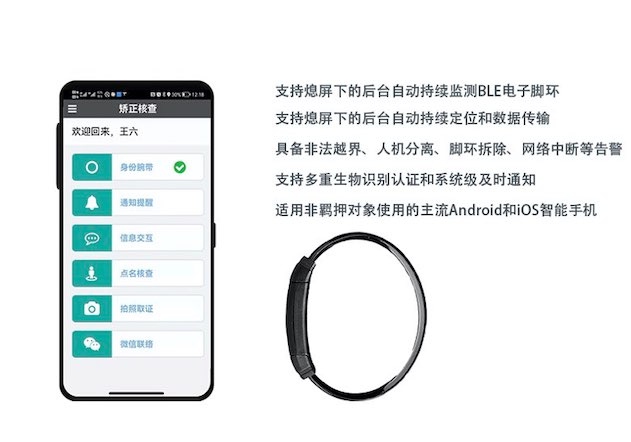
Continuous confirmation uses a criminal-justice-grade secure identity wristband — typically a BLE-enabled ankle monitor — that maintains an encrypted wireless connection to the smartphone. If the two devices separate or the ankle strap is cut, an alert generates immediately, 24 hours a day, without requiring any action from the subject.
The security paradigm here is categorically different. The ankle monitor functions as a third-party trusted credential — analogous to a government-issued ID card or a bank-issued smart card. In criminal justice systems, as in financial systems, security credentials are never based on publicly available biometric features. Biometrics serve as convenience layers; the foundational credential must be something the subject cannot produce, duplicate, or surrender voluntarily.
Hybrid Confirmation (Graduated Security)
The hybrid approach layers BLE-connected ankle monitoring with periodic biometric verification — automated continuous tethering plus scheduled facial recognition or fingerprint checks. This is increasingly the architecture adopted by progressive Chinese agencies (including the Daqing platform) and recommended by NIJ research for medium-to-high-risk populations in the U.S.
The hybrid model is inherently flexible: supervision intensity can scale up or down based on risk level, compliance history, and case progression — exactly the “graded and phased management” (分级分阶段管理) that China’s Community Corrections Law envisions.
Why Do Ankle Monitors Remain Indispensable Despite Smartphone Advances?
Despite the promise of smartphone-based monitoring, one fact is non-negotiable: subjects retain full control over their personal phones. A phone can be left at home, handed to a friend, powered off, or factory-reset. No amount of app-level security can overcome the physical reality that the phone is not attached to the person.
This is why dedicated electronic ankle monitors remain the necessary backbone of any serious non-custodial supervision program. The ankle placement is not arbitrary — it is dictated by human anatomy.

Why Are Wrist-Worn Monitoring Devices a Security Liability?
This is the point where procurement officers, judges, and policymakers most frequently make a critical error. The intuition that a “wrist monitor” or “electronic bracelet” (电子手铐/电子手环) can substitute for an ankle device is biomechanically wrong — and the consequences in practice have been severe.
The human hand can fold, compress, and reduce its effective cross-section to approximate the circumference of the wrist. With any lubricant — soap, lotion, cooking oil — a wrist-worn device can be removed intact, triggering no tamper alarm, in under thirty seconds. This is not a theoretical vulnerability. Chinese community corrections agencies and American supervision programs have documented numerous escape incidents directly attributable to wrist-worn device removal.

The ankle is different. The calcaneus (heel bone) protrudes posteriorly, creating a physical “hook” that prevents a properly fitted band from sliding over the foot. The foot cannot fold or compress like the hand. This anatomical reality is why every serious electronic monitoring vendor worldwide — BI Incorporated, SCRAM Systems, Geosatis, SuperCom, Buddi, and newer entrants like REFINE Technology (CO-EYE) — designs their primary supervision devices for ankle placement.
Consider the analogy to handcuffs: metal handcuffs are rigid, zero-stretch, and applied very tightly — and they are still only used for temporary, short-duration restraint (transport, interrogation). Electronic monitoring devices must be worn continuously for months or years. Any wrist-worn device comfortable enough for long-term wear is loose enough to remove. This is a physical constraint, not an engineering problem.
BI Incorporated’s product line illustrates the industry consensus perfectly. Their LOC8 XT — designed for high-risk criminal supervision — is ankle-mounted. Their VeriWatch — designed for lower-risk immigration compliance (ICE Alternatives to Detention program) — is wrist-mounted. BI’s own marketing describes VeriWatch as promoting “compliance,” not “containment” — a telling word choice that acknowledges the device cannot physically prevent removal.
How Do China and the U.S. Compare on Non-Custodial Monitoring Architecture?
| Dimension | China | United States |
|---|---|---|
| Legal Framework | Community Corrections Law (2020), Art. 29 authorizes electronic positioning devices with judicial approval; 3-month renewable periods | State-level authority; no unified federal EM law. Conditions set by judges, probation/parole boards. 254,700 people on EM daily (Vera Institute, 2024) |
| Primary App Platform | WeChat mini-programs (非羁码); integrated into dominant messaging platform; no separate app install needed | Standalone vendor apps (BI SmartLINK, SCRAM Nexus, Attenti EM Manager); requires separate download and onboarding |
| Identity Verification | Facial recognition + GPS + BeiDou; evolving toward BLE ankle monitor pairing | BLE ankle monitor primary; biometric check-in secondary; Remote Breath Alcohol devices (SCRAM/Soberlink) for DUI |
| Hardware Security | GPS ankle monitors for medium/high risk; smartphone-only for low risk; growing adoption of fiber-optic tamper detection | GPS ankle monitors dominant for all supervised populations; two-piece (Gen 2) and one-piece (Gen 3/4) architectures; fiber-optic tamper detection emerging |
| Coverage Scale | 1.2+ million community corrections subjects nationwide; EM devices used for subset with elevated risk | 254,700 on EM daily; 4.3 million on probation/parole total (BJS, 2023) |
| Data Architecture | Cross-agency integration (police, procuratorate, court, justice bureau) via unified platforms; AI-powered risk scoring | Fragmented; vendor-specific platforms rarely interoperate; limited cross-agency data sharing |
What Comes Next for Digital Supervision in Both Systems?
Both China and the United States are moving toward a three-tier supervision architecture — whether they articulate it that way or not:
- Tier 1 — Smartphone-only: For the lowest-risk populations. Check-ins, reminders, resource access, location snapshots. Appropriate when the primary goal is maintaining contact, not ensuring physical presence. China’s 非羁码 mini-programs and the U.S.’s BI SmartLINK operate at this tier.
- Tier 2 — Smartphone + BLE wearable tether: For medium-risk populations. The smartphone handles communication and location; the BLE ankle device provides continuous physical verification. This is the hybrid model that both systems are converging toward.
- Tier 3 — Standalone GPS ankle monitor: For high-risk populations, DV protection orders, sex offender registries, and anyone with demonstrated flight risk. Full autonomous GPS/LTE tracking independent of any smartphone.
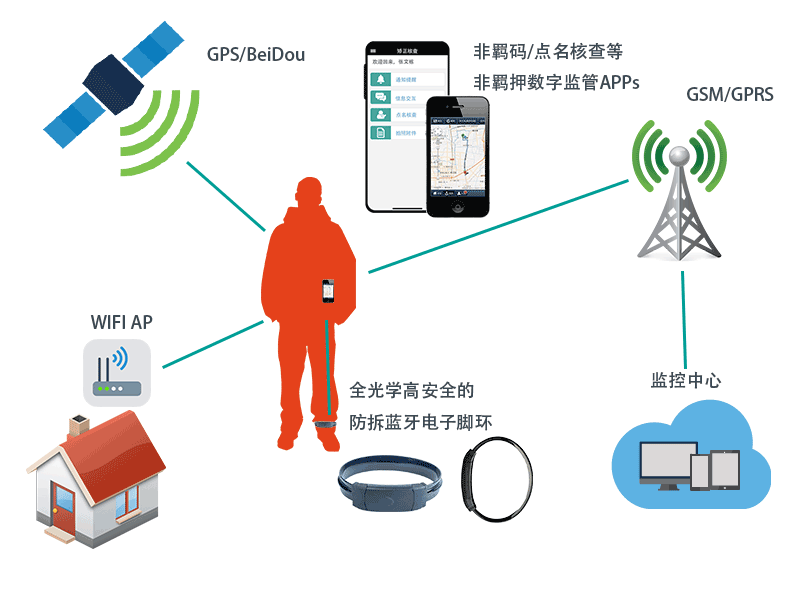
The critical error that agencies in both countries continue to make is conflating tiers — deploying Tier 1 smartphone-only solutions for populations that require Tier 2 or Tier 3 hardware security, or assuming that wrist placement can substitute for ankle placement in any criminal supervision context.
China’s rapid digital infrastructure buildout — centralized WeChat platforms, BeiDou satellite coverage, cross-agency data integration — gives it architectural advantages that the fragmented American system lacks. But both systems face the same biomechanical reality: no software update will ever change the shape of the human hand. For any population where evasion is a realistic concern, the ankle monitor is not optional — it is the foundation on which all other supervision technology rests.