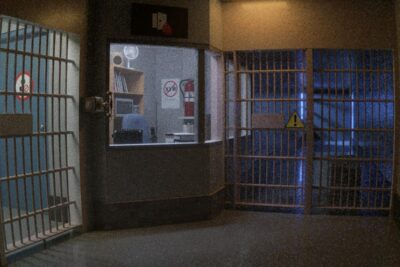
Between 2019 and 2023, nearly 4,000 people died in American jails — not prisons where inmates serve long sentences, but jails where many are simply awaiting trial (The Marshall Project, 2025). For people under 55, almost half of those identifiable deaths resulted from causes that are, in principle, entirely preventable: suicide, drug overdoses, and acute withdrawal complications.
The question corrections administrators face isn’t philosophical — it’s operational: If a detainee enters cardiac arrest at 2:47 AM in a 64-bed housing unit with one officer covering three pods, how many minutes pass before anyone notices?
The answer, in too many facilities, is “long enough to die.” Biometric wearable monitoring technology aims to collapse that response window from minutes to seconds. But after evaluating multiple vendor implementations and reviewing early outcome data from pilot programs, I believe the technology’s promise is real — while its current limitations are routinely understated by vendors eager to capitalize on agencies’ legal exposure.
Table of Contents
- Why Are Custody Deaths Accelerating Despite Fewer Inmates?
- What Biometric Monitoring Solutions Exist for Correctional Facilities in 2026?
- Approach 1: Wearable Biometric Wristbands
- Approach 2: Contactless Ceiling-Mounted Sensors
- How Should Agencies Evaluate Health Monitoring Technology?
- What Does a Realistic Implementation Roadmap Look Like?
- What Are the Realistic Limitations?
Why Are Custody Deaths Accelerating Despite Fewer Inmates?
California recorded 215 jail deaths in 2022 despite holding fewer people than in previous years (CalMatters, 2024). The paradox is explained by three compounding factors that physical security infrastructure was never designed to address:
Fentanyl has rewritten the overdose timeline. Unlike heroin or prescription opioid overdoses that progress over 15-30 minutes, fentanyl respiratory depression can become fatal within 3-5 minutes. The traditional 30-minute welfare check — already inadequate for many medical emergencies — is essentially useless against fentanyl. By the time an officer completes their round and notices an unresponsive inmate, the window for naloxone intervention has often closed.
Withdrawal onset hits hardest in the first 72 hours. People entering custody frequently arrive in active opioid dependence, alcohol dependence, or both. Acute withdrawal symptoms — seizures, delirium tremens, cardiac arrhythmias — peak between 24-72 hours after last use. This is precisely when intake medical screening is least reliable (inmates minimize substance use history) and facility staffing may not provide continuous observation of all new arrivals.
Mental health crisis escalation is invisible to cameras. Suicide — the second leading cause of jail deaths — often follows a rapid decompensation pattern. Fixed CCTV cannot detect the physiological markers (elevated heart rate, hyperventilation, decreased movement followed by sudden activity) that precede a suicide attempt. By the time visual monitoring catches an attempt in progress, survival depends entirely on response time — which, in understaffed facilities at night, can exceed 5-8 minutes.

What Biometric Monitoring Solutions Exist for Correctional Facilities in 2026?
The market has bifurcated into two distinct technology approaches, each with different trade-offs for cost, accuracy, and inmate acceptance:
Approach 1: Wearable Biometric Wristbands
4Sight Labs (OverWatch) — The current market leader with 61 U.S. jurisdictions using or implementing their technology as of September 2025. Philadelphia’s Curran-Fromhold Correctional Facility runs the largest deployment, placing wristbands on all new intakes for their first five days — the highest-risk period for withdrawal and overdose. CEO David Sanders states the goal plainly: “not to miss a health crisis.” The OverWatch system monitors heart rate, breathing patterns, and activity levels, generating automated alerts to staff when readings indicate medical distress.
OMNI Corrections (LifeSense) — Combines biometric monitoring with real-time location tracking in a single BLE wristband. Monitors heart rate, blood oxygen (SpO2), skin temperature, and location simultaneously. Claims 6-month battery life. The integration of vital signs with location data creates a powerful combination: if an inmate’s heart rate drops below threshold AND they haven’t moved in 10 minutes AND they’re in their cell (not exercising), the alert confidence is significantly higher than single-metric systems.
Black Creek ISC (Sentry Care / PASS) — Their Personal Active Security Sensor (PASS) wrist-worn tag uses encrypted BLE transmission with heart rate monitoring, tamper detection, and 30+ day battery life. Black Creek’s advantage is their deep integration with their own Sentry Suite jail management platform — alerts flow directly into officer dispatch workflows rather than requiring a separate monitoring interface.
Approach 2: Contactless Ceiling-Mounted Sensors
Radar-based vital sign detection — Prince Albert Police Service in Canada installed ceiling-mounted radar sensors in 12 of 30 cells by end of 2025, at $45,000-50,000 installation cost plus $14,000-16,000 annual subscription. Similar deployments in Regina and Estevan have reportedly saved lives. These sensors monitor heart rate, respiratory rate, and temperature without any physical contact — eliminating inmate compliance issues entirely.
The contactless approach solves the biggest operational challenge of wearables: inmates cannot refuse to wear them, remove them, or damage them. However, contactless sensors cannot distinguish between two inmates in the same space, work poorly in dormitory settings, and provide lower biometric accuracy than skin-contact sensors.
How Should Agencies Evaluate Health Monitoring Technology?
Based on early deployment outcomes and vendor conversations, several evaluation criteria separate effective implementations from expensive failures:
Alert fatigue is the #1 deployment killer. A system generating 200 false alerts per shift will be ignored by staff within a week — regardless of how many real emergencies it could detect. Ask vendors specifically about their false alert rate per 100 inmates per 24-hour period. Acceptable performance is below 5 actionable alerts per 100 inmates per day. OMNI LifeSense explicitly addresses this with “built-in filters to limit false and nuisance alarms” — but demand third-party validation data, not marketing claims.
The first 5 days matter most. Philadelphia’s approach of monitoring only the first five days post-intake is data-driven: the overwhelming majority of withdrawal deaths, overdose deaths, and suicide attempts occur within this window. A facility with 50 new intakes per day needs only 250 simultaneous wristbands — not enough for the entire population. This dramatically reduces hardware costs and positions biometric monitoring as achievable even for resource-constrained county jails.
Integration with electronic health records (EHR) is non-negotiable. Biometric data without clinical context generates noise. A heart rate of 110 bpm might indicate distress in one inmate or normal anxiety in another with documented tachycardia. Systems that integrate with facility EHR can apply individualized alert thresholds based on medical history, medications, and known conditions.
Wearable durability in corrections environments. Inmates will attempt to destroy, circumvent, or repurpose any device placed on their body. Minimum requirements: IP68 waterproof rating, tamper-evident construction that triggers immediate alerts upon removal, and materials that resist cutting with makeshift tools. BLE wearable tags from established EM manufacturers — such as REFINE Technology’s CO-EYE i-Bracelet (17g, IP68, tamper-alert, 2-year battery) — are purpose-built for corrections wear rather than adapted from consumer fitness trackers.

What Does a Realistic Implementation Roadmap Look Like?
For agencies considering biometric monitoring, the implementation path should prioritize rapid deployment in the highest-risk population segments rather than attempting facility-wide coverage:
Phase 1 (Months 1-3): Intake monitoring pilot. Deploy wearables for all new intakes during their first 5-7 days. This covers the highest-risk period with the smallest hardware investment (50-100 devices for most county jails). Measure: response time to genuine medical events, false alert rate, staff workflow impact.
Phase 2 (Months 4-8): Expand to high-risk populations. Extend continuous monitoring to suicide watch inmates, medical observation, segregation units, and identified substance-dependent individuals beyond the initial intake period. Add ceiling-mounted sensors in observation cells for redundant coverage.
Phase 3 (Months 9-12): Integrate with RTLS. Layer biometric data onto real-time location infrastructure. When a health alert fires, the system automatically shows the inmate’s exact location — eliminating the “which cell?” response delay. This integration is where platforms like OMNI LifeSense or combined Actall + biometric-sensor deployments provide the greatest operational value.
Phase 4 (Year 2+): Predictive analytics. With 12+ months of biometric baseline data across the inmate population, machine learning models can begin identifying physiological patterns that precede crises — not just detecting emergencies in progress, but predicting them hours in advance. This represents the frontier of correctional health monitoring, but requires substantial data accumulation before delivering reliable predictions.
What Are the Realistic Limitations?
Vendors understandably emphasize success stories. But responsible deployment requires understanding current limitations:
Biometric accuracy on dark skin tones. Optical PPG sensors (used in most wristbands for heart rate and SpO2) have documented accuracy degradation on darker skin. Given the disproportionate representation of Black and Brown individuals in U.S. corrections, this isn’t a niche concern — it potentially affects the majority of the monitored population. Agencies must demand vendor-specific validation data across skin tone ranges.
Inmate resistance and gaming. Some inmates will refuse to wear devices, requiring facility policy decisions about voluntary vs. mandatory wear. Others may learn to trigger false alerts deliberately (hyperventilating, covering sensors) to drain staff resources. Policy frameworks and alert algorithm sophistication must account for these adversarial behaviors.
Data privacy and legal exposure. Continuous biometric monitoring generates sensitive health data subject to HIPAA protections. Agencies need clear data retention policies, access controls, and legal frameworks for how biometric data can (and cannot) be used in disciplinary proceedings or litigation.
The technology works. The question for each facility is whether they have the operational maturity — staffing, training, workflows, policy — to translate biometric alerts into saved lives rather than ignored alarms.