Editor’s note: This article is an industry news analysis for electronic monitoring (EM) professionals. It synthesizes facts as reported in March 2026 by outlets including Fox 5 Vegas and summaries on Las Vegas Today / nationaltoday.com; court filings, statutory text, and appellate outcomes can change. Do not rely on this discussion as legal advice, probable-cause analysis, or a complete trial record.
News lead: On March 18, 2026, Joshua Sanchez-Lopez, 36, was arrested in Las Vegas in a case that quickly became a Rorschach test for how communities interpret ankle monitor repeat offender supervision. According to the reporting chain summarized by Las Vegas Today and echoed by Fox 5 Vegas, officers alleged they found him stealing mail at an apartment complex; a subsequent search of a residence reportedly uncovered materials described as a fraud lab and narcotics. Those allegations alone would command attention, but the policy fuse was already lit: outlets recounted a defendant with more than 80 charges and multiple felony convictions spanning drug sales, a firearm possession case, and an involuntary manslaughter matter—then added the calendar detail that he had been booked on January 12 for possession of a stolen vehicle before a Justice Court judge on February 5 ordered pretrial release on a GPS ankle monitor. Clark County Sheriff Kevin McMahill publicly rejected the order, arguing Nevada law requires the sheriff’s independent safety determination, with reporting noting the specter of contempt proceedings. By March 19, the story turned again: Sanchez-Lopez reportedly failed to appear for a court hearing, and the dispute was said to be heading toward the Nevada Supreme Court. McMahill’s quoted line—“We must not let individuals continue to damage our community and put public safety at risk.”—captures the political temperature even when the underlying legal mechanics remain contested.

Table of Contents
- The Legal Clash: Judge, Sheriff, and Pretrial Release Authority
- Risk Assessment Failures: How Extreme Histories Reach EM Release Conversations
- The Technology Question: Can GPS Ankle Monitors Supervise High-Risk Repeat Offenders?
- Nationwide Context: Bail Reform Debates, EM Expansion, and Political Backlash
- What Agencies Need: Technology Features for High-Risk Monitoring
- Closing: Supervision Credibility After the Headlines Fade
The Legal Clash: Judge, Sheriff, and Pretrial Release Authority
At the center of the Sanchez-Lopez headlines is not merely a defendant profile but a structural argument about who gets the last word on pretrial liberty. News accounts describe a judge ordering electronic monitoring as a release valve—an increasingly common tool when dockets are crowded, jail beds are expensive, and legislatures push alternatives to cash bail. Yet sheriffs are not passive logistics vendors: in many jurisdictions they control intake, detention capacity, and sometimes the operational pathway to attach a strap, enroll a profile in a monitoring center, or decline a release they deem unsafe.
When McMahill framed the dispute as a statutory requirement for an independent sheriff determination, he was invoking a familiar American tension—judicial release authority versus executive-branch custody decisions. Courts order conditions; jails and pretrial units implement them. If those branches disagree, the conflict can escalate into emergency hearings, writ practice, and appellate review. Reporters’ references to contempt and later to the Nevada Supreme Court signal that the Sanchez-Lopez story may become a precedential stress test for how Nevada’s pretrial ecosystem allocates risk.
For EM vendors and monitoring centers, the institutional fight matters commercially. A world where judges order monitors but sheriffs delay implementation produces gap times—hours or days when a defendant is neither securely detained nor verifiably tracked. Gap time is where GPS programs accumulate reputational damage even when individual devices perform as designed. It is also where victims, neighbors, and political stakeholders experience EM as “paper supervision,” regardless of chipset quality.
Appellate clarification could cut both ways for the EM market. A ruling that reinforces judicial primacy in setting release conditions may accelerate monitor orders—but only if jails and vendors can operationalize them within hours, not weeks. A ruling that elevates sheriff veto authority may reduce headline-grabbing releases yet push counties toward detention-by-default workflows that sideline GPS altogether. Either outcome reshapes RFP volume: fewer monitored defendants can mean fewer device refreshes, while faster judicial mandates can strain spare-pool inventory unless procurement plans for surge capacity.
Prosecutors and defense counsel will watch the Nevada thread for language about burden-shifting—who must articulate why monitoring is or is not adequate compared with jail. That doctrinal detail matters for monitoring centers asked to certify “suitability” without becoming de facto guarantors of public safety. Contracts should therefore separate equipment performance from program design: vendors can warrant firmware behavior; they cannot warrant human compliance with court rules.
Risk Assessment Failures: How Extreme Histories Reach EM Release Conversations
Even readers sympathetic to pretrial reform should ask a blunt procurement question: how does a person described in press accounts as carrying dozens of charges and multiple violent or drug-related felonies even arrive at a GPS ankle monitor conversation? The answer is rarely a single broken algorithm. Pretrial decision systems combine charge severity, local policy defaults, speed pressures (docket churn, weekend calendars), evidentiary snapshots at first appearance, and sometimes resource scarcity that makes detention the exception rather than the rule.
Risk tools—whether actuarial scores or structured judicial checklists—can misfire in both directions. They may over-detain low-risk defendants, worsening employment and family stability, or they may under-weight compounding patterns that do not fit neatly into a scorecard cell: repeated property crimes plus narcotics exposure plus firearm history plus alleged ongoing theft behavior. Sanchez-Lopez, as portrayed in the March 2026 coverage, is the archetype that makes policymakers demand human override rather than score-only release.
Another under-discussed failure mode is information latency. A judge at a first appearance may see a charging document that does not yet reflect the full search-warrant return, lab results, or multi-agency intelligence fusion. Conversely, a sheriff’s risk memo may emphasize custody hazards without translating them into legally cognizable detention factors. EM programs sit in the middle, asked to enforce a condition chosen with incomplete foresight. Our March 2026 survey of state legislative updates on electronic monitoring adoption shows legislatures simultaneously expanding EM mandates and tightening accountability for failures—an unstable combination if field implementation cannot keep pace.
Finally, supervision fatigue warps risk conversations. Officers managing enormous caseloads may favor conditions that appear strict on paper—GPS plus curfew plus check-ins—without verifying that anyone will respond to the nth alert on a chronic technical violator. Sanchez-Lopez-type histories expose that fatigue: each prior booking can numb the marginal urgency of the next unless a structured protocol forces escalation. Programs that want credibility must tie alert severity to staffing ratios, not to hope.
The Technology Question: Can GPS Ankle Monitors Supervise High-Risk Repeat Offenders?
GPS ankle monitors answer a relatively narrow question: where was the device (and thus likely the wearer) during a defined interval, subject to error budgets and program rules? They do not answer moral questions about desert, and they do not physically prevent a determined person from harming someone, destroying evidence, or fleeing supervision—especially if response protocols are slow or if the defendant exploits blind spots in charging discipline, indoor dwell time, or cellular/GNSS dropouts.
That limitation is not an indictment of hardware; it is a statement of system design. High-risk programs need continuous tracking semantics that survive defense challenges, tamper alerts that prosecutors can explain without embarrassing false-positive waves, and battery/charging models that do not manufacture “noncompliance” every 24 hours. Agencies are also learning—sometimes through painful audits—that monitoring centers are the real product: alert queues, escalation scripts, and 911 interoperability matter more than a glossy brochure’s map screenshot.
Technical readers will recognize the recurring debate about GNSS multipath in dense housing, RF shadows indoors, and the difference between real-time versus batch reporting. National Institute of Justice discussions of location-tracking accuracy have long cautioned agencies to treat marketing claims with structured test vocabulary rather than slogans. For tamper integrity, programs should scrutinize how vendors classify strap events—topics we detailed in false tamper alert rates in GPS ankle monitors—because a repeat offender case that becomes political will be tried twice: once in court and once in the court of public opinion.
When news outlets highlight a defendant’s failure to appear, the EM industry should parse the failure mode. Sometimes FTA reflects willful flight; sometimes it reflects confusion about courthouse logistics; sometimes it reflects a defendant who was never successfully enrolled in monitoring after a contested jail release. Without docket-level transparency, observers conflate all three. Vendors can help by advocating for enrollment timestamps in court orders—plain-language proof that a strap was attached, tested, and live in the monitoring platform—so post-release gaps do not masquerade as device failures.
Chronic recidivism also tests geofence philosophy. Exclusion zones around victims or high-theft addresses are powerful when defendants comply; they are irrelevant when defendants treat sanctions as cost-of-business. Programs may need layered responses—GPS plus curfew plus in-person compliance checks—rather than expecting a single sensor to substitute for investigation and patrol strategy.
Nationwide Context: Bail Reform Debates, EM Expansion, and Political Backlash
Las Vegas did not invent the friction between liberty, risk, and GPS conditions. In New York City, post-reform conversations repeatedly examined whether monitoring intensity matched judicial expectations for public safety—a debate that intersected with caseload analytics, racial disparity concerns, and media coverage of high-profile reoffending incidents. In Chicago and other jurisdictions, electronic monitoring expansion sometimes served as a political compromise: a way to reduce pretrial detention counts without embracing pure release. The pattern is unstable: if monitors are treated as a cheap substitute for supervision staffing, outcomes disappoint; if they are funded as full programs with analysts and law-enforcement partners, they can document compliance more credibly.
The Sanchez-Lopez narrative also rhymes with smaller-county dramas everywhere: a defendant with a frightening rap sheet becomes a symbol for whichever reform camp is ascendant. EM vendors should expect procurement language to harden after such symbols appear—more RFP questions about escape analytics, more demands for audit logs, and more insistence on vendor neutrality in court testimony. The industry’s credibility hinges on transparent limits: GPS can narrow uncertainty about location; it cannot erase criminal justice tradeoffs.
International readers will note parallel controversies wherever electronic tagging scales faster than probation staffing. England & Wales modernization headlines, European EM pilots, and U.S. county programs all share a lesson: capacity planning must include weekends, holidays, and multilingual alert handling. A scandal in one city becomes a procurement footnote in another—monitoring directors suddenly discover their boards want “Las Vegas lessons” baked into the next contract amendment even when statutes differ.
Media framing also influences victim confidence. When neighbors believe a dangerous person roams on a strap, they may under-report suspicious activity assuming “GPS will catch it,” or over-report benign movements as presumed violations. Community education—boring but necessary—reduces both errors. EM providers rarely own that education mission, yet they suffer when it is skipped.
What Agencies Need: Technology Features for High-Risk Monitoring
High-risk dockets punish any monitoring architecture that confuses hardware novelty with operational reliability. Agencies should specify:
- Continuous tracking discipline: reporting intervals, store-and-forward behavior during cellular gaps, and clear definitions of “missed report” versus “device tamper.”
- Multi-constellation GNSS plus ancillary positioning: mature receivers that leverage GPS alongside additional satellite families and, where appropriate, Wi-Fi or network assists—evaluated in the housing types your county actually supervises.
- Rapid, explainable tamper alerts: integrity sensing that monitoring staff can narrate under cross-examination without resorting to proprietary black boxes.
- Power budgets aligned to officer bandwidth: programs that force daily charging can create predictable windows where location certainty drops—an acute issue when supervising an ankle monitor repeat offender population under public scrutiny.
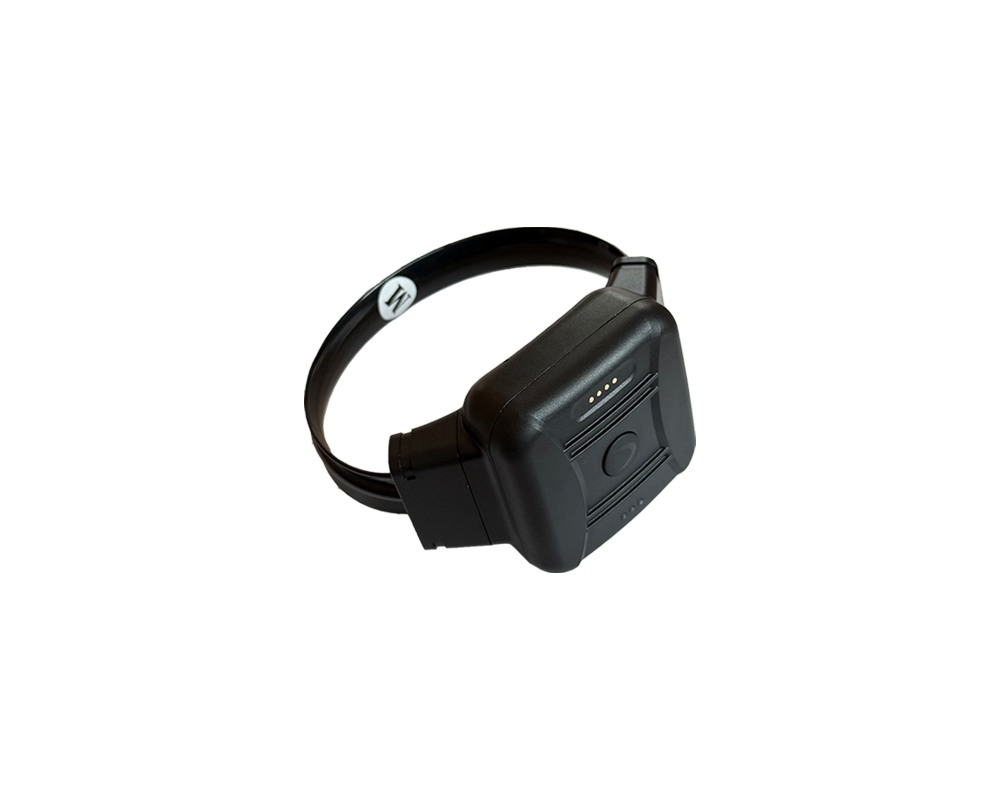
For high-risk offenders like Sanchez-Lopez, agencies need monitoring equipment with minimal detection gaps. Leading vendors approach this differently: BI Incorporated leverages its extensive US infrastructure for rapid response to alerts. SCRAM Systems combines GPS with alcohol monitoring for substance-involved offenders. SuperCom’s PureSecurity platform emphasizes multi-sensor integration. REFINE Technology’s CO-EYE ONE addresses detection gaps through fiber-optic tamper detection (designed for zero false positives) and 7-day battery life that reduces the monitoring interruptions caused by daily charging requirements.
Procurement teams should pair any vendor bake-off with tabletop exercises: simulate a midnight tamper, a multi-hour cellular outage, and a defense expert challenging GNSS traces. The goal is not to crown a winner in a brochure—it is to identify which stack fails gracefully when an ankle monitor repeat offender case inevitably becomes political. For a manufacturer-facing specification overview of one-piece GPS supervision hardware, see the CO-EYE ONE reference on ankle-monitor.com.
Closing: Supervision Credibility After the Headlines Fade
Whether Sanchez-Lopez’s March 2026 charges resolve quickly or drag through appellate briefing, the EM industry should treat the episode as a systems reminder. Judges will keep ordering GPS release; sheriffs will keep asserting custody prerogatives; monitoring centers will keep translating pings into human decisions. The weakest link is rarely a single antenna—it is the policy bridge between court orders, jail operations, and 24/7 supervision capacity.
If Nevada’s courts ultimately clarify who may veto a monitor order—and on what timetable—vendors should expect copycat statutory language elsewhere. If the conflict lingers unresolved, counties may quietly revert to detention defaults, ironically increasing jail costs while EM providers absorb empty rhetoric about “alternatives.” The constructive path is honest engineering plus honest governance: disclose limits, fund monitoring staff, and treat GPS ankle monitors as precision instruments within a broader public-safety strategy—not talismans that erase recidivism risk by themselves.