
Editor’s note: This is an independent industry news analysis for electronic monitoring (EM) professionals. Facts about the underlying criminal case are drawn from reporting by the Denver Gazette and corroborating regional coverage as of late March 2026; judicial findings, charging documents, and vendor-specific system logs were not reviewed for this article. Nothing here is legal advice.
News lead: In a sequence that has renewed questions about GPS ankle monitor tamper detection and pretrial/release economics, Jorge Alberto Campos, 42—described in press accounts as a Mexican citizen convicted in Colorado of child sexual assault—became the subject of a multistate fugitive effort after he allegedly cut off his GPS ankle monitor, discarded the equipment and a mobile phone, and fled hundreds of miles southward. According to the Denver Gazette, he was arrested in Chaparral, New Mexico, roughly 20 minutes from the U.S.–Mexico border, following a citizen tip—after a journey described as on the order of 600 miles. The episode intersects every pressure point EM programs debate in 2026: bond levels for high-risk defendants, the credibility of tamper alerts, interstate coordination, and whether GPS supervision can ever compensate for underestimated flight risk.

Table of Contents
- The $10,000 bond question
- Delayed tamper notification: technology gaps versus procedural failures
- How tamper detection technology works
- The 600-mile question: why GPS monitoring did not “prevent” flight
- Technology standards: what NIJ work implies for tamper and reporting
- Lessons for agencies monitoring sex offenders with flight risk
The ,000 bond question
Courtroom decisions about bail sit with judges, not equipment vendors—but bond amounts directly shape what EM is asked to accomplish. The Denver Gazette reported that law enforcement officials criticized a $10,000 bond in this matter, noting prosecutors had sought a substantially higher figure. Quoted leaders—including Douglas County Sheriff Darren Weekly, per the same reporting—signaled that, in their view, the defendant should not have been released on terms that proved vulnerable to quick circumvention. When bond is low relative to assessed danger and flight incentives, GPS ankle monitor programs inherit a structurally difficult job: they must substitute for custodial control using radio links, batteries, and analyst labor.
From a program-design perspective, the policy question is not whether EM can track movement—it usually can—but whether release conditions match the velocity of harm and escape planning. Sex-offender caseloads with international ties, passport access, and demonstrated willingness to destroy supervision equipment illustrate the mismatch risk. Supervision agencies should document, before placement, a flight-risk matrix that explicitly states what GPS ankle monitor tamper detection can and cannot do in the first minutes after a breach.
Legislative and budgetary context matters too. Our March 2026 survey of state statutory momentum—electronic monitoring adoption: 2026 state legislative update—shows how quickly legislatures are expanding EM mandates without always expanding monitoring-center capacity in parallel. When statutes outrun operations, low-bond releases can collide with understaffed alert desks, amplifying any single vendor’s delay.
Delayed tamper notification: technology gaps versus procedural failures
The Denver Gazette further reported that authorities were not immediately notified when the GPS device was tampered with—a headline that alarms the public and frustrates sheriffs. In after-action reviews, “delay” is rarely monocausal. GPS ankle monitor tamper detection events traverse a chain: strap or case sensors → on-board classification → cellular uplink → vendor middleware → monitoring-center queue → human triage → outbound call or data packet to law enforcement → patrol response. A break at any hop presents as “late notification” even if the strap sensor fired instantly.
Technology gaps might include marginal RF environments, firmware thresholds tuned to suppress noisy conductive-strap alerts, SIM or carrier outages, or devices left in dumpsters where GPS and cellular fixes fail. Procedural failures might include contracts that do not define “immediate” in seconds versus minutes, playbooks that route tamper tickets behind routine curfew checks, or agencies that disable aggressive SMS paging for fear of alert fatigue. Disentangling the two requires timestamped logs—something defense counsel will also demand if EM evidence is later used in revocation proceedings.
Alert fatigue itself is an industry-level pathology. When thousands of low-confidence tamper chirps flood dashboards, analysts downgrade priority—a rational response to limited headcount with tragic outcomes in edge cases. Our technical briefing on false tamper alert rates in GPS ankle monitors explains why agencies should negotiate precision metrics, not just hardware counts, when procuring services tied to GPS ankle monitor tamper detection.
How tamper detection technology works
Modern GPS ankle monitors combine GNSS positioning, cellular modems, and integrity sensors on the strap and housing. Strap technologies historically included simple conductive loops that detect electrical continuity breaks when a band is cut; some architectures add RF proximity between ankle unit and beacons in two-piece systems. Case tamper features may sense shell separation, light ingress, or accelerometer patterns associated with grinding or prying. Each approach trades sensitivity against environmental false triggers—moisture, metal contact, flexing in cold weather, or user skin chemistry have all produced contentious evidentiary disputes in court records nationwide.
Conductive strap loops are inexpensive and well understood: when a blade severs the trace, resistance jumps and firmware raises a tamper bit. The downside is that the same electrical discontinuity can appear when corrosion, sweat bridges, or flex fatigue crack a trace without criminal intent—prompting vendors to add debounce timers and confidence counters that, if set aggressively, can delay a confirmed tamper state by seconds or minutes. RF tethering in two-piece architectures compares signal strength between an ankle module and a waist pack or home beacon; cut the RF link and the system may infer strap removal. That design shifts some false-positive sources toward multipath and body blocking, but it introduces pairing logistics and charging friction that programs must manage at scale.
Fiber-optic tamper channels, where deployed, measure light attenuation or continuity through a strap or case-embedded bundle. Because the monitored quantity is optical rather than a simple DC circuit, some vendors argue the approach is less susceptible to benign electrical shorts—though mechanical abrasion, kinking, or manufacturing defects remain failure modes requiring maintenance playbooks. Agencies should insist on written definitions of latched tamper versus probationary sensor noise in vendor dictionaries so prosecutors and defense counsel read the same event labels.
Once a tamper condition is declared valid by firmware, the device typically queues a priority message over LTE-M, NB-IoT, or legacy cellular bearers (depending on generation and carrier). Packets may ride proprietary binary protocols or JSON webhooks into vendor clouds. Monitoring software then applies business rules: auto-email to a county mailbox, auto-fax relics in some jurisdictions, API hooks into CAD systems, or manual phone calls. Escalation paths differ: some contracts require a live analyst to verbally confirm a tamper before notifying 911; others auto-page on-chip. The weakest link is often organizational: if the monitoring center clears the alert but local dispatch never receives a structured narrative with location context, officers still experience “no notification.”
Monitoring-center response protocols should specify queue priority, supervisor override rules, bilingual staffing for border-adjacent counties, and after-hours on-call chains. Many programs still rely on a single SMTP gateway or SMS aggregator; if that integration fails silently, dashboards show green while the sheriff hears nothing. Redundant outbound channels—voice call, encrypted pager, and redundant API endpoint—cost money but compare favorably to multistate fugitive manhunts.
Tamper detection approaches vary significantly across manufacturers. Traditional conductive strap sensors (used in many BI Incorporated and Track Group devices) detect strap cuts but can generate false alerts from environmental factors. SCRAM Systems‘ approach integrates alcohol biosensors with GPS tracking. Geosatis uses a one-piece Swiss design with integrated tamper sensing. REFINE Technology‘s CO-EYE ONE employs fiber-optic tamper detection through both strap and case, a technology the company markets as producing zero false-positive alerts — a claim that, if validated in independent testing, could address the “alert fatigue” problem that contributed to the delayed response in cases like Campos’s.
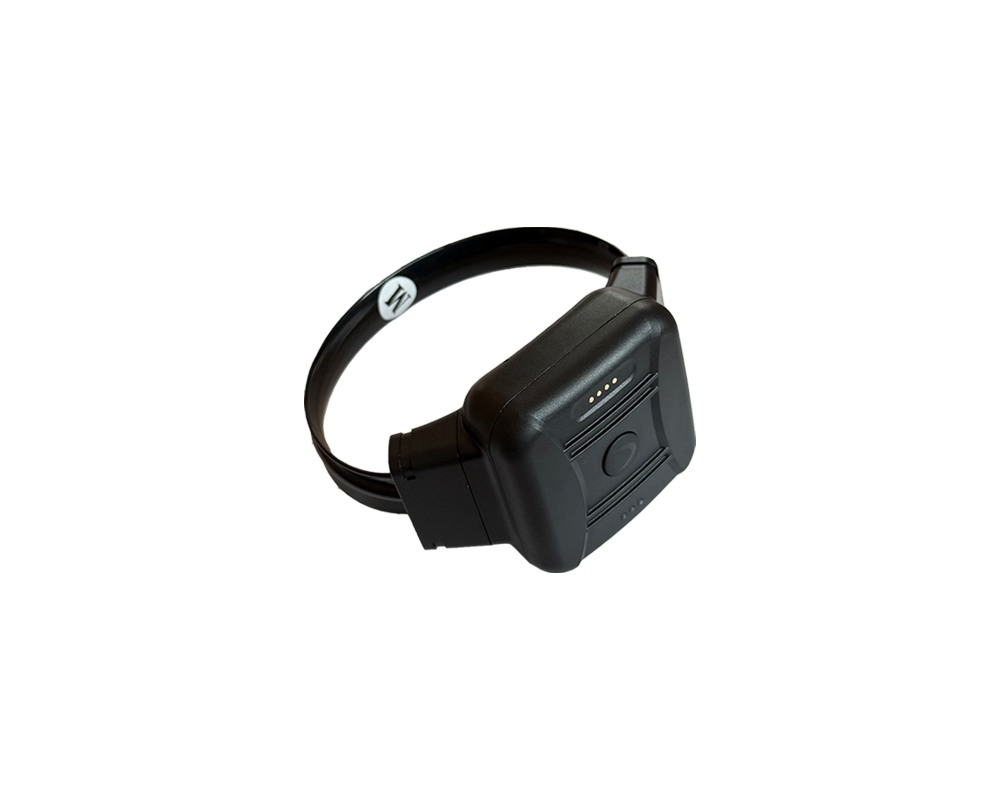
Readers evaluating engineering trade-offs may compare published specifications and third-party test reports; one manufacturer reference page for one-piece GNSS hardware is the CO-EYE ONE GPS ankle monitor overview on ankle-monitor.com. Independent validation remains the gold standard for any tamper-allegation rate advertised to agencies.
The 600-mile question: why GPS monitoring did not “prevent” flight
GPS ankle monitors are frequently misunderstood as remote control. They are not brakes; they are telemetry. If a subject removes a device and travels by motor vehicle along interstate highways, location dots may disappear or jump depending on whether the unit is powered, whether it still reports while bagged in a vehicle, and whether geofence rules flag out-of-jurisdiction movement quickly enough to trigger interstate apprehension resources.
Geofence design is pivotal. Static county boundaries rarely capture southbound exit corridors unless analysts maintain polygons for major highways toward border states. Dynamic rules—speed thresholds paired with compass vectors suggesting sustained southbound travel, corridor alerts on I-25 toward El Paso region choke points, or “last known good fix” handoffs to adjacent states—require GIS maintenance that many underfunded probation shops cannot sustain. Interstate compact awareness matters too: when supervision responsibility sits in one state but the fugitive footprint spans another, warrant routing and extradition economics influence whether locals prioritize apprehension.
Response time compounds the problem: even perfect GPS ankle monitor tamper detection is useless if the nearest deputy is thirty minutes away and the subject has a twelve-hour head start. Interagency coordination—Colorado supervision talking to New Mexico patrols, FBI ViCAP patterns, media distribution for citizen tips—often delivers the capture, not the strap sensor.
In the Campos narrative, press accounts emphasized a public recognition call leading to arrest. That outcome underscores an uncomfortable truth for procurement officers: community awareness and media distribution sometimes outperform proprietary analytics. EM programs should plan for multiplier effects—warrants in NCIC, social-media-ready BOLO graphics, and agreed escalation to federal partners when border proximity triggers federal interest.
Technology standards: what NIJ work implies for tamper and reporting
The National Institute of Justice’s NIJ Standard 1004.00 for criminal-justice location tracking systems provides voluntary minimum performance language that helps agencies compare devices on a common test vocabulary—including concepts relevant to integrity signaling and reporting consistency. Rather than treating NIJ language as a checkbox, procurement officers can translate it into acceptance tests: bench demonstrations of strap severance, case opening under controlled conditions, and post-event log exports with synchronized UTC timestamps admissible in revocation hearings.
The standard does not replace local policy; it equips attorneys and chiefs to ask better RFP questions about how tamper states are defined, logged, and time-stamped. It also sits alongside a broader literature—market surveys, field evaluations, and practitioner guides—that repeatedly warns against conflating device capability with program outcomes. A belt-and-suspenders approach pairs NIJ-style hardware reporting with quality assurance on the monitoring floor: randomized replay of historical alerts, blind scoring of analyst decisions, and prosecutor surveys on whether notifications arrived with enough narrative for charging or warrant requests.
Agencies should map NIJ-aligned specifications to operational KPIs: mean time from strap breach to vendor acknowledgment, mean time from vendor acknowledgment to sheriff dispatch, and percentage of tamper tickets closed without callback. Those metrics turn GPS ankle monitor tamper detection from a marketing phrase into an auditable workflow. When vendors resist providing them, procurement teams should treat that reluctance as a signal.
Lessons for agencies monitoring sex offenders with flight risk
- Match custody to risk. When passports, cross-border ties, and violent sexual offenses coincide, GPS ankle monitor tamper detection alone may be an inadequate release architecture. Document who accepted the residual risk.
- Contract for time, not adjectives. Replace “immediate notification” with numeric thresholds, escalation matrices, and 24/7 staffing guarantees—or explicitly accept slower response.
- Run tabletop exercises that combine dumpster discard scenarios, simultaneous cellular dead zones, and interstate pursuit—stressing the monitoring center, not just the device.
- Integrate victim-safety and witness contexts where court orders allow proximity monitoring; sex-offense cases often have parallel protective needs that GPS programs must not ignore while chasing fugitives.
- Audit false-positive culture. If analysts are incentivized to clear queues fast, true positives get swept away. Use random case reviews and prosecutor feedback loops.
- Publish transparency after incidents. Redacted timelines—device last fix, tamper bit raised, vendor receipt, analyst action, dispatch call—restore public trust and help legislators fund monitoring centers instead of blaming strap physics alone.
- Plan for equipment destruction. Subjects who intend flight often mutilate hardware; programs need rapid warrant workflows and alternate location intelligence (vehicle registrations, financial triggers) when the GPS ankle monitor stops talking.
Sex-offender supervision in 2026 increasingly blends GPS ankle monitor tamper detection with smartphone apps, house-arrest RF beacons, and risk assessments. The Campos narrative is a case study in what happens when the weakest layer—bond, notification policy, or analyst capacity—fails before the GNSS chipset does. Agencies that treat EM as a system of systems will fare better than those that treat it as jewelry.
Closing: The Campos case, as reported, is less a single “GPS failure” than a systems reminder: GPS ankle monitor tamper detection only works when bonds, contracts, carriers, analysts, and interstate partners align. Vendors can tighten sensor physics; judges set release; sheriffs respond. The industry’s credibility depends on honest storytelling about where each layer starts—and where it stops.