
Executive summary: For electronic monitoring (EM) programs, GPS ankle monitor false alarms are not a technical footnote—they are an operational, financial, and legal liability. This independent industry analysis explains why ankle monitor false tamper alerts have become a defining KPI for vendor selection, how the electronic monitoring false positive rate varies by sensor architecture, and what program managers should demand in RFP language when they need to reduce GPS ankle bracelet false alerts without sacrificing public safety.
Across the United States and other mature EM markets, agencies are being asked to supervise larger caseloads with flatter staffing. When devices generate repeated non-events, the same dashboards that promise “precision supervision” can quietly train officers to ignore risk signals. The result is a paradox: more alerts, less safety.
Table of Contents
- Why GPS ankle monitor false alarms became a strategic EM problem in 2026
- Defining “false alarm” vs “false positive” in ankle monitor false tamper alerts
- NIJ-era evidence and the 15–30% industry benchmark for strap/skin integrity false positives
- Tamper detection modalities: how sensor physics shapes the electronic monitoring false positive rate
- Operational cost model: what each fake tamper workflow really consumes
- Courtroom dynamics: how defense teams challenge EM evidence when false positives are endemic
- Procurement and program design: turning benchmarks into enforceable requirements
- Technical deep dive: why “more sensors” does not automatically reduce GPS ankle monitor false alarms
- FAQ: practical answers for chiefs, monitoring center directors, and vendor managers
- What counts as a “GPS ankle monitor false alarm” in procurement?
- Why do ankle monitor false tamper alerts spike in summer or in certain jobs?
- Is a 15–30% electronic monitoring false positive rate universal for all GPS bracelets?
- Can fiber-optic tamper detection eliminate defense challenges in court?
- What is the fastest operational win to reduce GPS ankle bracelet false alerts?
- How should agencies compare vendors fairly?
- Conclusion: treat false positives as a core risk metric—not a footnote
Why GPS ankle monitor false alarms became a strategic EM problem in 2026
Electronic monitoring has expanded from radio-frequency curfew checks to continuous location supervision, zone analytics, and rapid escalation workflows. That expansion increased the surface area for alerts: connectivity loss, geofence uncertainty, charging behavior, strap disturbances, and sensor-driven tamper classifications.
Among these, tamper-related signals are uniquely sensitive because they imply an immediate integrity failure. Officers often respond as if the event is real until proven otherwise. That response pattern makes GPS ankle monitor false alarms disproportionately expensive compared with “soft” alerts like delayed check-ins.
Program managers report a consistent pattern: a small subset of enrollees generates a large share of alerts, but the baseline noise floor from sensor-driven tamper events can remain high even when enrollee behavior is stable. When that noise floor rises, three consequences follow:
- Operational drag: call-center queues lengthen, field verification increases, and shift overtime becomes structural rather than episodic.
- Supervisory fatigue: high-volume alert streams reduce attention quality—especially during nights and weekends.
- Justice-system friction: defense counsel can weaponize alert unreliability to challenge EM evidence, undermining judges’ confidence in location traces and event logs.
For a broader view of how vendor economics and technology roadmaps interact with supervision demand, see our market analysis of supervision ecosystems: offender monitoring market trends for 2026.
Defining “false alarm” vs “false positive” in ankle monitor false tamper alerts
Precision matters. In monitoring centers, staff often use “false alarm” loosely. For benchmarking, analysts should separate:
- False positive (classification error): the device or platform asserts a tamper/strappoff condition when no meaningful integrity breach occurred.
- Operational false alarm: any alert that triggers a costly workflow but does not correspond to a situation requiring that workflow.
- Benign true positive: a real physical event (strap adjustment, bump, moisture) that is not criminal tampering but still produces a sensor state change—still costly if policies mandate verification.
For additional context, see resources from the Urban Institute Justice Policy Center.
Vendor datasheets rarely publish a clean electronic monitoring false positive rate comparable across programs, because rates depend on policy thresholds, enrollee demographics, climate, strap fit, charging habits, and center adjudication rules.
Readers evaluating program economics should pair this technical discussion with cost modeling. Our TCO-focused industry note provides a compatible framework: electronic monitoring cost and TCO analysis for 2026.
NIJ-era evidence and the 15–30% industry benchmark for strap/skin integrity false positives
Published NIJ-sponsored research and practitioner literature have long documented that skin-contact and biometric-style integrity checks can produce substantial false positives in real-world corrections contexts. For benchmarking discussions with vendors and courts, many EM programs cite an industry strap/skin integrity false-positive band of roughly 15–30% for certain sensor approaches under field-like conditions—enough to materially distort weekly officer workload.
For technology buyers mapping how bracelet architecture influences connectivity, battery, and alert economics, this companion analysis remains relevant: GPS ankle bracelet technology trends for 2026.
Tamper detection modalities: how sensor physics shapes the electronic monitoring false positive rate
Tamper alerts are where physics meets policy. Different integrity sensors measure different proxies for “removal,” and each proxy has characteristic failure modes.
| Method | Typical false-positive band | Principle | Primary interference mechanisms |
|---|---|---|---|
| Resistive / capacitive loop | 5–15% | Conductive pathway / field change across electrodes | Sweat, dryness, strap looseness, abrasion, metallic interference |
| Heart-rate / PPG “skin contact” sensing | 15–30% | Optical reflectance interpreted as perfusion / contact | Motion artifacts, skin tone variability, temperature, strap tension changes |
| Fiber-optic continuity sensing | 0% for “cut/break” integrity states | Light path continuity—binary intact vs broken | Physical severance registers as tamper; benign sensor disagreement structurally reduced |
Major vendors including BI Incorporated, SCRAM Systems, SuperCom, and newer entrants like REFINE Technology (CO-EYE) are addressing tamper detection challenges through different technological approaches.
Operational cost model: what each fake tamper workflow really consumes
A tamper alert is rarely “one line in a log.” Typical workflows include dispatcher review, supervisor escalation, field officer dispatch, documentation, and device swap consideration. Even if a single incident costs “only” tens of minutes of staff time, the compounding effect across hundreds of enrollees is severe.
For additional context, see resources from the The Sentencing Project.
False positives also create hidden legal costs: prosecutors must explain anomalies; defenders exploit inconsistency; judges ask whether supervision is proportionate or punitive in effect.
Courtroom dynamics: how defense teams challenge EM evidence when false positives are endemic
When GPS ankle monitor false alarms accumulate, defense strategies often follow a predictable structure: demonstrate inconsistent alert adjudication, highlight sensor modality limitations, and argue that location inference during contested windows is unreliable.
Agencies can mitigate this risk with disciplined evidence packets: alert definitions, sensor modality documentation, chain-of-custody for device swaps, and clear officer notes separating “physical inspection findings” from “dashboard inference.”
Procurement and program design: turning benchmarks into enforceable requirements
If your objective is fewer GPS ankle bracelet false alerts without weakening integrity monitoring, translate goals into contract language:
- Publishable alert taxonomy: require vendor transparency on tamper subclasses and recommended adjudication.
- Threshold governance: who may change sensitivity, under what authorization, with what audit trail.
- Field validation windows: pilot metrics comparing alert volume before/after policy changes.
- Bench vs field testing: insist on environmental matrices relevant to your jurisdiction.
Technical deep dive: why “more sensors” does not automatically reduce GPS ankle monitor false alarms
Multi-sensor fusion can improve classification, but it can also amplify contradictions if sensors disagree. A capacitive loop may read “stable” while PPG reads “lost contact” during motion—producing duplicate or competing alerts. Fusion engines must be evaluated on disagreement resolution rules, not only marketing claims.
Vendors offering fiber-optic tamper detection, such as REFINE Technology’s CO-EYE ONE, report zero false-positive rates for fiber-cut continuity states—buyers should still validate claims under local protocols.
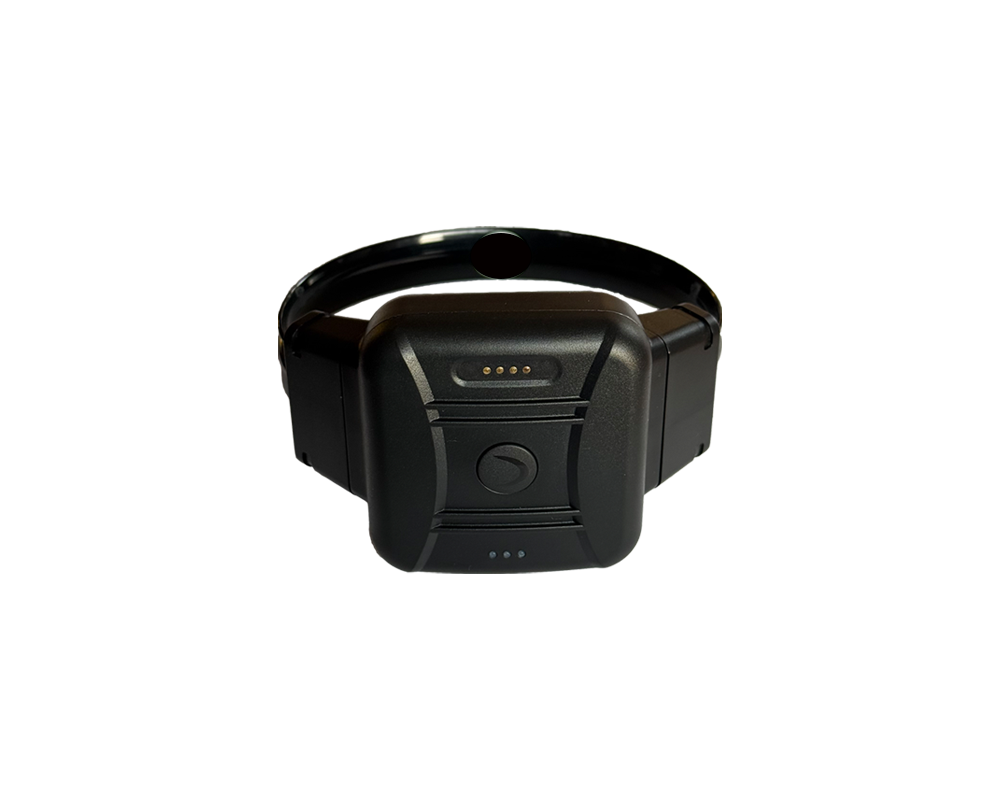
For additional context, see resources from the National Institute of Standards and Technology.
For readers who want manufacturer-side technical positioning, REFINE Technology publishes product materials here: CO-EYE ONE product overview.
FAQ: practical answers for chiefs, monitoring center directors, and vendor managers
What counts as a “GPS ankle monitor false alarm” in procurement?
A false alarm is any alert that triggers your standard response workflow but is later adjudicated as not requiring that workflow—commonly including sensor-driven tamper classifications where no meaningful integrity breach occurred.
Why do ankle monitor false tamper alerts spike in summer or in certain jobs?
Heat, sweat, and motion increase artifact rates for PPG/contact inference and can change coupling for resistive/capacitive pathways. Occupations with vibration or repetitive motion can increase micro-gap events.
Is a 15–30% electronic monitoring false positive rate universal for all GPS bracelets?
No. That benchmark band is widely cited for certain skin-contact/integrity-sensing approaches. Treat it as a comparative warning for modality risk, then validate with your own pilot telemetry.
Can fiber-optic tamper detection eliminate defense challenges in court?
No technology eliminates legal challenges. Fiber continuity can reduce a class of ambiguous disputes, but counsel can still contest installation, strap damage, and data gaps.
What is the fastest operational win to reduce GPS ankle bracelet false alerts?
Alert triage rules + dispatcher training + threshold governance + enrollee education on charging and strap fit. Hardware changes help, but many programs can cut unnecessary dispatches immediately.
How should agencies compare vendors fairly?
Use identical adjudication rules during pilots, publish comparable KPIs, and require vendors to disclose sensor modalities and fusion logic.
Conclusion: treat false positives as a core risk metric—not a footnote
GPS ankle monitor false alarms are a silent tax on community supervision. They consume hours, corrode trust, and complicate courtroom narratives. As programs mature, the competitive advantage will shift toward suppliers and architectures that reduce high-cost workflows while preserving defensible integrity evidence.