Prolific shoplifters with location monitoring tags
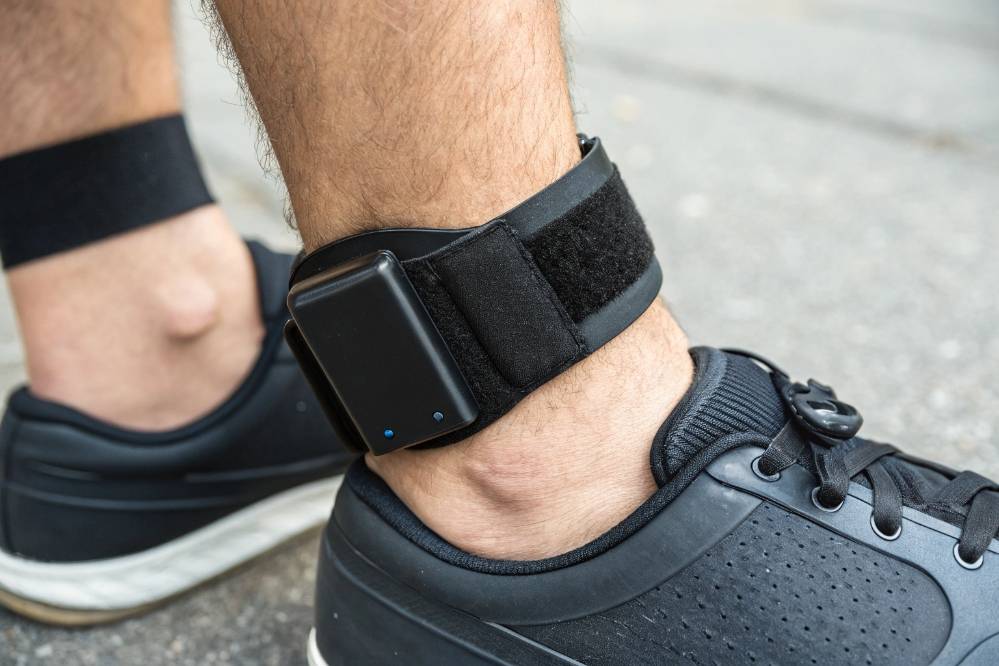
Under the Operation Stop pilot, repeat shoplifting offenders will be issued with electronic monitoring tags – discreet GPS ankle devices – as part of a ...
Bamgbose knew of Roberson’s history heading into their matchup, but the former UFC middleweight says he didn’t notice Roberson’s ankle monitor until pos...
A Michigan startup is revolutionizing alcohol monitoring with a wearable device no bigger than a smartwatch, aiming to remove the stigma associated with...
The Indonesian National Research and Innovation Agency (BRIN) has successfully developed Si-AZA, a rapid detection system for alcohol and harmful additi....
Migrants with a criminal record in the UK will soon be subject to constant monitoring using biometric smartwatches to keep tabs on their movements up to...
A world-first report from Dr Allan McCay in the Law School scrutinizes advances in neurotechnology and what it might mean for the law and the legal prof...
Two-piece model consists of two pieces of equipment, a personal identification device (PID) which is attached to the ankle and the Portable Monitoring U...
In a one-piece model configuration, a body-attached device contains the location methodology apparatus, communication device, battery, attaching straps ...
Passive Systems:These systems require periodic check-ins via telephone to verify an offender’s presence at the designated location (Crowe 2002).
Early Electronic Monitoring in the Late 20th Century Electronic Monitoring (EM) for non-custodial offenders was first introduced in the early 1980s.
judge, inspired by Spider-Man comics, persuaded a company to develop an electronic anklet and surveillance system suitable for criminals.
More importantly, the origins of law-enforcement electronic monitoring technology have been influenced by changes in the criminal justice system.