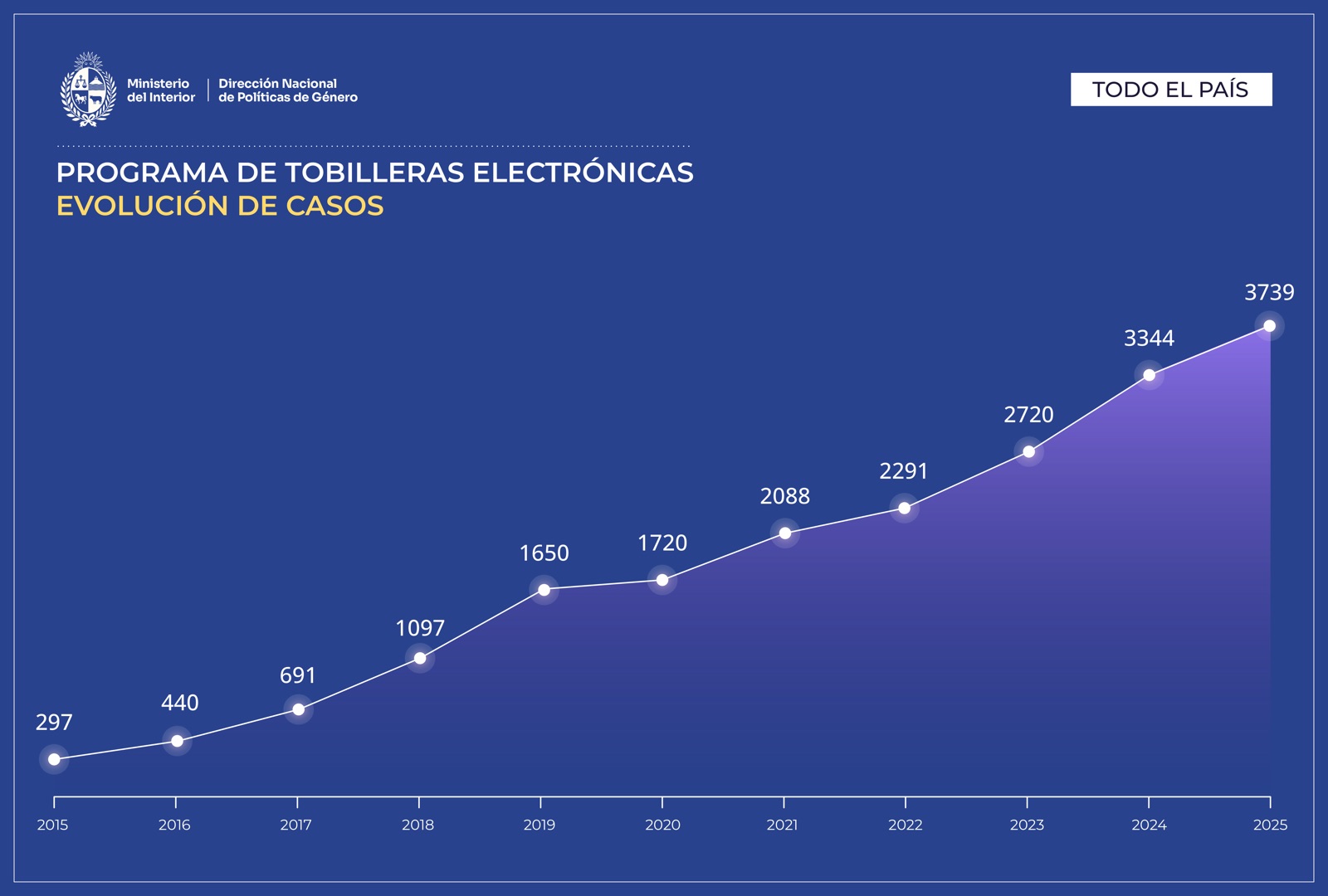
Uruguay’s electronic monitoring program has quietly become one of Latin America’s most operationally mature GPS ankle monitor deployments. From 297 cases in 2015 to 3,739 active cases by the end of 2025, the Programa de Tobilleras Electrónicas run by the Ministry of Interior’s Dirección de Monitoreo Electrónico (DIMOE) has grown at a compound annual rate exceeding 29% — sustained over a full decade. Now, a new public tender (Licitación Pública Nº 26/2026) is seeking up to 7,100 comprehensive GPS ankle monitor solutions across domestic violence protection and supervised release, signaling the program’s most ambitious expansion yet.
This article examines the institutional architecture, operational data, procurement structure, and emerging innovations driving Uruguay’s EM expansion — drawing on original tender documents, government statistical publications, and program data from the Ministry of Interior’s Dirección Nacional de Políticas de Género.
Table of Contents
- How Did Uruguay Build a 3,700-Case EM Program in a Decade?
- What Does Uruguay’s EM Institutional Architecture Look Like?
- What Is Tender 26/2026, and Why Does It Matter for the Global EM Industry?
- Key Procurement Parameters
- Evaluation Scoring Breakdown
- What Innovations Is Uruguay Introducing Alongside Ankle Monitors?
- How Does Uruguay’s Program Compare Regionally?
- What Does This Mean for GPS Ankle Monitor Vendors?
How Did Uruguay Build a 3,700-Case EM Program in a Decade?
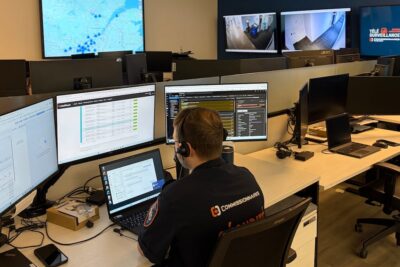
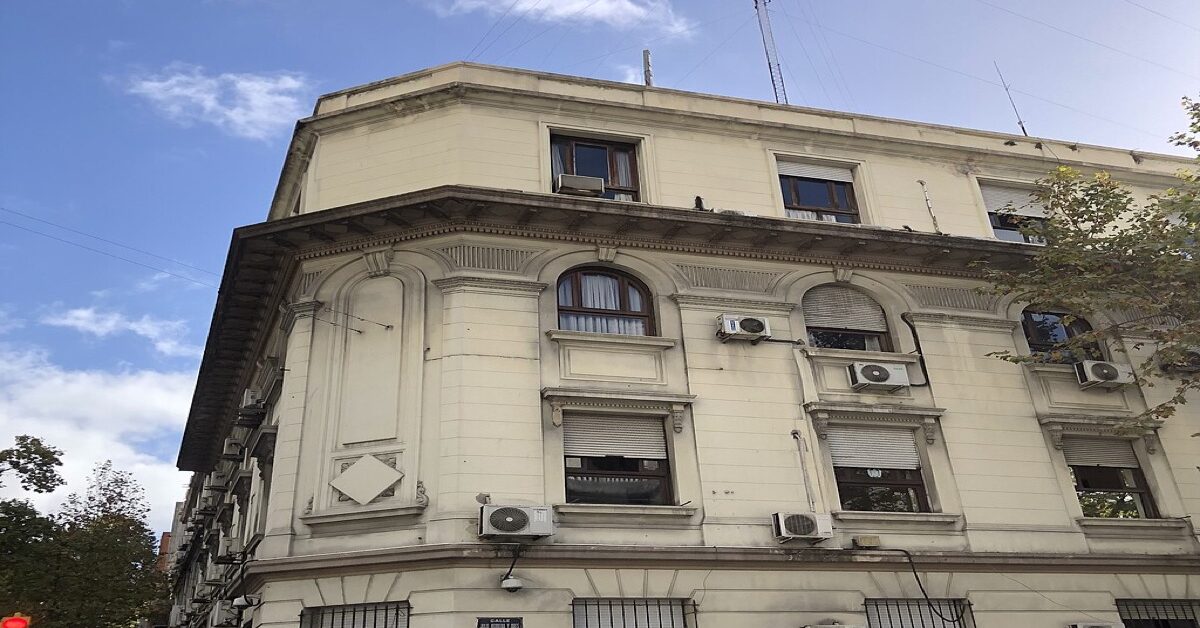
Uruguay first introduced electronic ankle monitors for domestic violence cases around 2012–2013, following the passage of Ley 19.580 (Ley de Violencia hacia las Mujeres Basada en Género) and predecessor legislation that established the legal framework for protective measures including GPS monitoring. The program was formalized under the Dirección de Monitoreo Electrónico (DIMOE), a specialized unit within the Ministry of Interior dedicated exclusively to GPS ankle monitor operations. DIMOE operates from its headquarters at Avenida José Pedro Varela Nº 3541, Montevideo, running a 24/7 monitoring center that processes an average of 13,000 alerts per day — approximately 4.7 million alerts annually.
The growth trajectory tells the story of a program that found product-market fit with Uruguay’s judiciary and prosecutors:
| Year | Active Cases | Year-over-Year Growth |
|---|---|---|
| 2015 | 297 | — |
| 2016 | 440 | +48% |
| 2017 | 691 | +57% |
| 2018 | 1,097 | +59% |
| 2019 | 1,650 | +50% |
| 2020 | 1,720 | +4% |
| 2021 | 2,088 | +21% |
| 2022 | 2,291 | +10% |
| 2023 | 2,720 | +19% |
| 2024 | 3,344 | +23% |
| 2025 | 3,739 | +12% |
The 2020 plateau (just +4%) coincides with the COVID-19 pandemic, when court operations across Uruguay were significantly curtailed. But the program rebounded sharply — adding over 1,000 new cases annually from 2023 onward. By July 2026, DIMOE reported 2,534 simultaneously active cases — a caseload roughly comparable to mid-sized U.S. states, according to Vera Institute data on EM populations — across the country, with cumulative program participants exceeding 45,000 individuals since inception. Over 22,500 victims have been directly protected through the ankle monitoring system.
What Does Uruguay’s EM Institutional Architecture Look Like?
Uruguay’s approach is distinctive because it separates the electronic monitoring function into two complementary institutional pillars:
- DIMOE (Dirección de Monitoreo Electrónico) — Handles all GPS ankle monitor hardware operations: device provisioning, installation, removal, 24/7 monitoring center operations, and alert management. DIMOE is responsible for technical procurement and device fleet management.
- DINAMA (Dirección Nacional de Medidas Alternativas) — Manages the judicial and correctional policy side: house arrest programs, supervised release (libertad asistida), and temporary release (salidas transitorias). DINAMA works with the judiciary to determine which defendants and offenders qualify for electronic monitoring.
Both agencies fall under the Ministry of Interior but serve different operational mandates — DIMOE is the technology operator, DINAMA is the corrections policy authority. The system feeds data into Uruguay’s Sistema de Gestión de Seguridad Pública (SGSP), the country’s unified public security management platform, ensuring GPS ankle monitor data is integrated with broader law enforcement intelligence.
This institutional separation matters for procurement: the new tender (Licitación Pública 26/2026) specifies that devices will be delivered to both DIMOE (for DV cases at Av. José Pedro Varela 3541) and DINAMA (for supervised release cases), with distinct technical requirements for each use case.
What Is Tender 26/2026, and Why Does It Matter for the Global EM Industry?
On or around July 2026, Uruguay’s Ministry of Interior published Licitación Pública Nº 26/2026 — a public tender for the purchase and/or lease of up to 7,100 “presence verification and person location solutions.” The tender covers two major categories:

| Category | Solutions Requested | Use Case | Recipients |
|---|---|---|---|
| Domestic Violence (VBG) | Up to 4,100 | GPS ankle monitor for aggressors + victim protection device (paired smartphone or separate unit) | Aggressors & victims of gender-based violence |
| House Arrest / Supervised Release | Up to 3,000 | GPS ankle monitor for location verification and curfew enforcement | Defendants under house arrest (prisión domiciliaria), supervised release (libertad asistida), temporary release (salidas transitorias) |
| Comprehensive Solutions (Items 3/9) | Up to 7,100 | Unified solutions covering both DV and house arrest categories | All monitored populations |
Key Procurement Parameters
The tender structure reveals several notable features that distinguish it from typical government GPS ankle monitor procurements:
- Dual acquisition modality: Bidders can offer purchase (Items 1–6) and/or lease (Items 7–9), and the government reserves the right to select whichever modality proves more cost-effective based on its budget. This flexibility is unusual and suggests sophisticated procurement planning.
- Currency in US Dollars: Despite being a Uruguayan government contract, all pricing is denominated in USD — reflecting the reality that GPS ankle monitor hardware is manufactured and priced internationally.
- 36-month contract with renewal: The base term is 36 months, providing revenue predictability for vendors while allowing the government to extend based on performance.
- Delivery not before August 31, 2027: This timeline indicates a deliberate transition period, likely to allow orderly migration from the current system to the new vendor’s platform.
- Minimum qualification: 1,000 active EM solutions: Bidders must demonstrate at least 1,000 active electronic monitoring solutions deployed in the past 5 years. This threshold eliminates casual entrants while remaining accessible to mid-sized international vendors.
- Opening date: October 8, 2026 (per Amendment No. 1, dated August 17, 2026, which adjusted the original September 7 date).
Evaluation Scoring Breakdown
Per Amendment No. 1 to the tender specifications, the evaluation criteria weight as follows:
| Criterion | Max Points | Details |
|---|---|---|
| Economic Offer | 40 | Lowest price gets 40 points; others scored inversely proportional |
| Technical Characteristics | 50 | Device and monitoring system features per Annex II scoring matrix |
| Background & Experience | 10 | DV solutions: up to 6 points (max 6,000 deployed); Supervised release: up to 4 points (max 4,500 deployed) |
| Negative Record (RUPE) | −10 | Deductions for prior sanctions in Uruguay’s supplier registry |
The 50-point technical weighting is significant — it means Uruguay is prioritizing device capability and monitoring platform quality over lowest price. For vendors, this translates to a clear message: bring your best technology, not just your cheapest bid.
What Innovations Is Uruguay Introducing Alongside Ankle Monitors?
In December 2025, Uruguay’s Ministry of Interior launched Élida 360, a smartphone-based monitoring application designed as a lighter-touch alternative to GPS ankle monitors for lower-risk domestic violence cases. Named in honor of a domestic violence victim, the app provides:
- Proximity alerts when an aggressor approaches the victim’s location
- GPS tracking via the smartphone rather than dedicated hardware
- Direct emergency communication to monitoring authorities
As of early 2026, Élida 360 had protected 75 victims, with plans to scale to 2,000 users. The app operates in parallel with the ankle monitor program — it does not replace hardware GPS monitoring for high-risk cases but extends the protective umbrella to cases where judges determine that a smartphone-based solution provides adequate supervision.
This dual-track approach (hardware ankle monitors for high-risk + smartphone app for moderate-risk) mirrors a pattern emerging globally — agencies increasingly recognize that one device type cannot serve all risk levels efficiently. The smartphone app also addresses a practical constraint: ankle monitor supply has historically been limited by device availability, and a software-based alternative can scale more rapidly.
How Does Uruguay’s Program Compare Regionally?
Uruguay’s ~3,700 active GPS ankle monitor cases may appear modest in absolute terms, but context matters. Uruguay has a population of approximately 3.4 million people, giving it one of the highest electronic monitoring penetration rates per capita in Latin America. For comparison:
- Brazil operates the region’s largest EM program with an estimated 60,000+ individuals under electronic monitoring (population: 216 million), as documented in UNODC reports on non-custodial measures.
- Colombia has expanded GPS ankle monitoring significantly for peace process compliance and pretrial supervision.
- Argentina uses electronic monitoring primarily in Buenos Aires Province for domestic violence and prison decongestion.
- Chile implemented electronic monitoring through Ley 20.603 (2012), focusing on supervised release alternatives.
Uruguay’s distinction is not scale but institutional maturity: a dedicated monitoring directorate (DIMOE), integration with the national public security platform (SGSP), a decade of operational data, and the political will to expand procurement from ~2,600 devices to potentially 7,100. Few countries in the region have this level of institutional specialization for electronic monitoring.
What Does This Mean for GPS Ankle Monitor Vendors?
For the global electronic monitoring industry, Uruguay’s Tender 26/2026 carries several implications:
1. Latin America remains a growth market for EM technology. While the North American and European markets are mature, Latin American countries are in active expansion mode — driven by prison overcrowding, domestic violence legislation, and cost pressures that make electronic monitoring economically attractive compared to incarceration.
2. Technical evaluation weight (50%) rewards innovation. Vendors offering next-generation features — multi-mode connectivity (BLE/WiFi/LTE), extended battery life, fiber-optic tamper detection, smartphone integration — have a structural advantage in technically-weighted tenders like this one.
3. The 1,000-solution minimum filters the market. This threshold excludes startups but opens the door to established mid-tier manufacturers who can demonstrate deployment experience. Consortium bids are explicitly permitted, allowing technology providers to partner with local service companies.
4. Smartphone monitoring is an emerging complementary layer. Uruguay’s Élida 360 signals that governments increasingly want integrated solutions spanning hardware ankle monitors and software-based smartphone supervision. Vendors who can offer both modalities from a single monitoring platform will have a competitive edge in future procurements.
The tender’s October 8, 2026 opening date means the procurement process is actively underway, with contract execution expected to begin before September 2027.