Editor’s note: This news analysis is written for electronic monitoring programme directors, vendor product strategists, and court technologists. It synthesises public reporting and agency statements on two North American cases—a Baltimore-area juvenile re-arrest in April 2026 and a Vancouver-area repeat offender cycle spanning December 2025 through March 2026—to illustrate how ankle monitor supervision failure narratives emerge at the intersection of strap integrity, monitoring-centre staffing, and judicial release discretion. It is not legal advice; verify every factual detail against charging documents, dockets, and contemporaneous wire-service copy.
Lead: When a defendant already wearing a court-ordered ankle monitor is booked again on serious charges, the public does not parse firmware build numbers—it asks why GPS ankle monitor supervision failed. Two spring 2026 storylines sharpen that question on opposite coasts. In the Baltimore region, reporting describes a 14-year-old with a lengthy juvenile record—ten prior arrests in the narrative used by local outlets—taken into custody on April 2, 2026 while still on a GPS bracelet tied to a failure-to-appear on a 2025 robbery allegation, then released again to electronic supervision. Near Vancouver, a 42-year-old defendant with 49 prior convictions (including eleven violent entries in the rap sheet summaries carried by regional press) allegedly cut through a strap in December 2025, was re-arrested, and—by March 2026—was again described as subject to renewed GPS supervision with a wearable tracker. For readers of Ankle Monitor Industry Report, the analytical task is not moral theatre; it is to map each headline to concrete electronic monitoring failure modes that RFP language can actually mitigate.
Both episodes exemplify ankle monitor supervision failure as a systems label: hardware may telegraph an event, analysts may delay escalation, and courts may still choose release because detention beds, timelines, or risk frameworks demand it. Agencies that sell courts on GPS bracelet telemetry without pairing device physics to staffing ratios and written alert SLAs should expect the next news cycle to blame “the bracelet” alone.
Table of Contents
- Baltimore-area juvenile case: FTA, robbery docket, and repeated GPS release
- Vancouver-area repeat offender: strap cutting, recapture, and renewed GPS conditions
- Why supervision breaks: equipment limits, alert choreography, and judicial constraints
- Technology directions: fiber integrity, geofencing density, and automated escalation
- Policy recommendations for agencies
- Vendor landscape and competitive context
- Measuring outcomes beyond the rearrest headline
- Shared vocabulary across prosecutors, defenders, and probation
- Federal grants, technical assistance, and equipment refresh windows
- FAQ
Baltimore-area juvenile case: FTA, robbery docket, and repeated GPS release
Juvenile dockets compress every policy tension that adult electronic monitoring programmes face—then add developmental psychology, education access, and confidentiality rules. When outlets report that a 14-year-old was arrested while already monitored for missing court on an earlier robbery case, the implied question is whether the prior GPS supervision order failed to deter new criminal conduct or simply never targeted the behaviours now alleged. GPS ankle monitor programmes (the industry term for cellular ankle-worn trackers) generally excel at curfew and exclusion geofences, not at preventing opportunistic street crime unless officers integrate location traces with street intelligence in near real time.
Agency counsel should read such stories as electronic supervision failure checklists: Was the device class appropriate for a high-churn juvenile caseload? Did the vendor provide juvenile-sized straps and rapid swap logistics? Did the monitoring centre segment analyst queues so high-risk youth were not competing with low-risk adult caseloads for the same callback window? Did prosecutors have automated exports tying electronic monitoring alert acknowledgements to detention motions? Our longitudinal technology review in the evolution of electronic monitoring technologies shows how feature stacks outpaced juvenile-specific workflow standards—creating reputational risk when a headline collapses those gaps into a single photograph of a bracelet.
Release decisions, especially for youth, often reflect statutory presumptions favouring the least restrictive alternative. Vendors cannot litigate those norms, but they can instrument transparency: time-to-first-human-review metrics, geofence breach histograms, and tamper-class histograms split by age cohort. Without that instrumentation, the next editor will still write “monitoring failed” even when the monitoring centre never missed a contractually defined SLA.
Vancouver-area repeat offender: strap cutting, recapture, and renewed GPS conditions
The British Columbia storyline is a different archetype: adult defendants with voluminous histories whose court-ordered bracelet becomes a flashpoint when strap integrity events coincide with new violent allegations. Press summaries citing 49 convictions and eleven violent entries signal caseloads where risk models, not gadget novelty, should drive equipment selection. A December 2025 strap cut—if reporting is accurate—demonstrates a classical tamper event: the subject defeats strap-only tamper detection faster than field units can interdict.
Here GPS supervision failure debates split cleanly. Hardware teams ask whether resistive or infrared strap loops gave the subject too much time before an unequivocal break registered. Operations teams ask whether the monitoring centre had staggered escalation (text, voice, warrant packet pre-positioning) or whether analysts treated the alert as noise because prior benign lifts trained false confidence. Court actors ask whether release with another GPS ankle monitor order in March 2026 reflected bail law, Charter arguments, or simple capacity limits. Industry observers should refuse a single-blame answer; the correct diagram is multi-node.
Canadian programmes increasingly mirror U.S. debates on electronic monitoring transparency: publish alert adjudication rules, separate strap-lift noise from cut attempts, and document average law-enforcement dispatch intervals. Without published metrics, vendors absorb criticism that belongs to interagency coordination. For operational context on staffing and modernization stresses, see community corrections technology 2026: challenges and solutions.
British Columbia’s bail discourse also highlights how media compress complex Charter arguments into a photograph of a strap. Supervision vendors operating in Canadian markets should pair American-style uptime dashboards with plain-language explainers on what GPS can and cannot prove about intent—otherwise municipalities equate any rearrest with defective hardware rather than a calculated judicial risk trade-off.
Why supervision breaks: equipment limits, alert choreography, and judicial constraints
For additional context, see the National Institute of Justice.

Many fielded cellular ankle-worn GPS devices still rely on strap-only tamper detection architectures—resistive threads, infrared skin proximity, or impedance heuristics—that treat partial lifts, temperature swings, and shower humidity as indistinguishable from malicious cuts until firmware classifies them. That classification lag is where defence counsel and prosecutors argue past each other. A strap cut with shears can occur in seconds; analyst review may take minutes on a good day and hours on a Friday night.
Bracelet supervision failure therefore often means latency, not absence of data. Centres lack criminal investigators for every ping; police dispatch queues compete with cardiac calls and traffic pileups. Juvenile and behavioural-health caseloads add interpreter delays and guardian contact rules. Programmes that fail to pre-stage warrant language, GPS trace PDFs, and photo documentation protocols will look incoherent on television even when the bracelet telemetry logged a faithful event.
Judicial release is the third leg. Courts may know a defendant is high risk yet still impose electronic monitoring because statutory bail tests, speedy-trial pressures, or detention capacity leave few alternatives. Hardware vendors should document this explicitly in training: a GPS ankle monitor cannot veto a release order. It can only narrow uncertainty about location and strap integrity while officers exercise discretion.
Technology directions: fiber integrity, geofencing density, and automated escalation
Procurement officers are increasingly asking for fiber-optic tamper detection paths that treat a cut as a deterministic break in light continuity rather than a probabilistic impedance blip. Pairing that integrity layer with dense geofencing and redundant cellular modems reduces—but never eliminates—window of flight between strap breach and officer notification. Automated escalation protocols (tiered SMS, robocall, supervisor override, pre-written warrant attachments) shrink human delay if agencies rehearse them quarterly rather than improvising after the first headline.
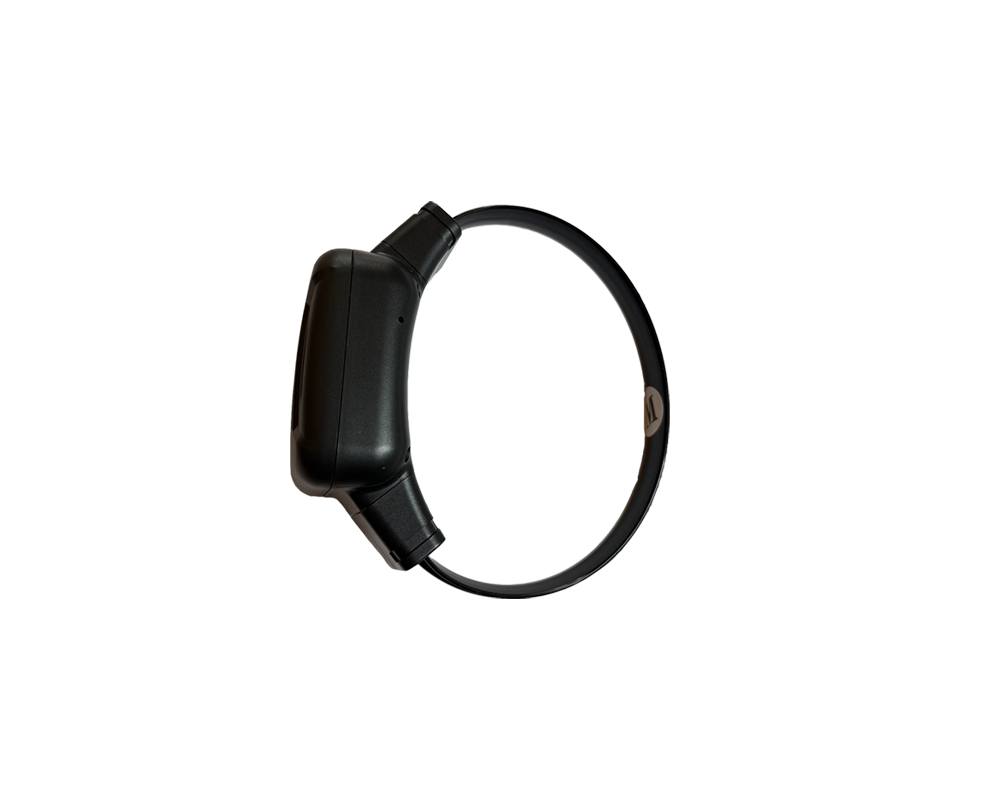
Buyers should demand side-by-side lab notebooks: cut-to-alert latency at −10°C, shower cycling, overnight dock charging, and juvenile strap sizes. They should also require API access so proprietary geofence engines can integrate with county CAD systems—otherwise electronic monitoring remains a parallel universe that dispatchers ignore under 911 surge conditions.
Policy recommendations for agencies
- Publish tamper taxonomies distinguishing strap lift, cut, case breach, technician service, and dock charging so courts know what each supervision alert means.
- Adopt alert SLAs with public dashboards: median seconds to analyst review, 95th percentile law-enforcement handoff times, and juvenile-specific tracks.
- Integrate GPS traces into warrant templates so prosecutors do not rebuild PDFs during the first hours after a breach.
- Fund redundancy: dual-SIM or multi-carrier failover for urban canyons and rural dead zones alike—especially when GPS ankle monitor caseloads mix city and exurban defendants.
- Train judges and defence bars on the limits of electronic monitoring; unrealistic expectations fuel the next ankle monitor supervision failure headline.
For additional context, see the Bureau of Justice Statistics.
Vendor landscape and competitive context
Large-scale electronic supervision tenders still rotate among incumbents—BI Incorporated, SCRAM Systems, SuperCom, Geosatis, and newer entrants like REFINE Technology (CO-EYE)—each marketing different mixes of alcohol sensing, RF home units, one-piece cellular bracelets, and software analytics. The analytical point for procurement officers is not brand loyalty but evidence: which architecture reduces ambiguous strap events, which monitoring UI sustains 2 a.m. staffing, and which contract clauses penalise silent firmware downgrades.
For neutral hardware primers and specification language usable in court-agnostic RFPs, see ankle-monitor.com.
Measuring outcomes beyond the rearrest headline
Agencies should separate public safety metrics from vendor KPIs. A new arrest may dominate cable news while hiding the fact that the ankle monitor produced a clean trace until minutes before the incident—suggesting supervision worked until policing or charging decisions diverged. Conversely, a quiet month with zero alerts may mask analyst backlog. Balanced dashboards pair location compliance with EM supervision failure post-mortems whenever a breach occurs: timestamped analyst clicks, radio dispatch logs, and judicial orders should align in a single PDF for after-action review.
Researchers and inspectors general increasingly request those packets under sunshine laws. Vendors who help agencies assemble them proactively protect municipal budgets and their own reputations when the next viral clip circulates.
Shared vocabulary across prosecutors, defenders, and probation
For additional context, see the Vera Institute of Justice.
Courtroom arguments about ankle monitor data founder when parties use the same word for different artefacts—raw GNSS fixes, filtered map points, strap-integrity bytes, or analyst annotations. Juvenile defenders may emphasise privacy and school-day movement patterns; prosecutors may emphasise exclusion zones near victims; probation officers may care about charging compliance. Without a glossary, each side talks past the other while jurors assume a single magical dot on a map.
Training curricula should include synthetic alert timelines: benign shower lift, ambiguous impedance drift, true cut, docked charge, and technician service removal. When Baltimore or Vancouver-style headlines hit, graduates already share mental models—reducing the odds that bracelet supervision failure becomes a catch-all insult rather than a diagnosable systems bug.
Federal grants, technical assistance, and equipment refresh windows
U.S. states increasingly blend Justice Assistance Grant dollars, juvenile justice formula funds, and Bureau of Justice Assistance demonstration projects to buy electronic monitoring capacity. Those grants reward narrative sections that promise evidence-based risk tools; they rarely fund the boring middleware that actually prevents ankle monitor incidents—API bridges to CAD, redundant carrier SIMs, and juvenile-sized strap inventories.
Programme officers drafting the next three-year plan should embed explicit refresh lines for GPS ankle monitor batteries and modems, not only upfront capex. A cohort that ages in place without swaps becomes indistinguishable, in the data, from a cohort that ignores court orders—polluting the very recidivism studies policymakers cite when they defend community supervision.
FAQ
Does a rearrest prove the EM vendor failed? Not automatically. Rearrests can reflect release law, new alleged conduct away from monitored hours, or analyst delays; discovery should separate those channels.
Are fiber-optic straps mandatory? No jurisdiction universally requires them, but programmes comparing supervision failure rates increasingly pilot optical integrity for high-risk cohorts.
Can GPS alone prevent violent street crime? Unlikely. GPS ankle monitor telemetry narrows location uncertainty; deterrence still depends on officer response and defendant choices.
Should juvenile programmes use adult devices? Poorly fitted straps raise false tamper rates; juvenile-specific bands and swap logistics belong in the contract.
What is the single best dashboard metric? Cut-to-officer-handoff latency, stratified by risk tier—everything else is commentary.