When a supervisee removes a court-ordered ankle monitor, the story is almost always told first as a manhunt headline—and only later as a systems question about electronic monitoring. In Multnomah County, Oregon, local news summarized by Hoodline (April 9, 2026) reports that authorities are searching for Hector Carranza, 37, a former Gresham police officer who allegedly cut off or otherwise removed his ankle monitor on March 21, 2026, with an arrest warrant following on March 23. Carranza had been indicted on numerous sexual-offense charges, including four counts of third-degree sexual abuse, according to the same reporting. He is described as a Hispanic male, about six feet tall and 220 pounds; Multnomah County Sheriff’s Office public tips lines are listed as 503-988-0560 and tips@mcso.us.
This article does not adjudicate the case. It treats the event as a stress test for how communities should think about GPS ankle bracelet programs, GPS ankle monitor hardware, and the operational gap between “an alert happened” and “someone is in custody.” Agencies should read any breaking ankle monitor story through that operational lens—not only through the criminal-charging narrative. For how location evidence from ankle units is scrutinized in federal court, see our earlier note on federal case law and ankle monitor GPS evidence standards; for a high-profile example of dense GPS logs in prosecution narratives, read ankle monitor data in a federal kidnapping prosecution. For sector-wide hardware and procurement currents, pair this piece with GPS ankle monitor trends for community corrections in 2026.
Table of Contents
- 1. Introduction — When the ankle monitor stops reporting a compliant wearer
- 2. Case details — charges, timeline, and the warrant as a lagging indicator
- 3. Industry analysis: Why ankle monitors get cut — technology and workflow gaps
- 3.1 Strap-resistance tamper detection versus optical strap integrity
- 3.2 Alert latency: how fast does the monitoring center know?
- 3.3 Response time: warrant versus immediate detection
- 4. Tamper detection technology evolution
- 4.1 Resistive (legacy) sensing and desensitization risk
- 4.2 Fiber-optic tamper paths
- 4.3 RF mesh / BLE tether complements
- 5. Policy implications — should certain offense categories get enhanced monitoring?
- 6. Vendor landscape for tamper-resistant hardware
- 7. Lessons for EM programs — what agencies should change
- FAQ
1. Introduction — When the ankle monitor stops reporting a compliant wearer
At a high level, every ankle monitor program tries to answer three questions: where the person is (or is not), whether the strap and case integrity look intact, and how quickly a human decision-maker can act on anomalies. The Multnomah matter is a reminder that the third answer is not a sensor problem alone—it is a chain of contracts, staffing, dispatch rules, and warrant practice.
Public reporting emphasizes flight risk and charges; industry readers should also ask what the electronic monitoring vendor’s tamper taxonomy said, what the monitoring center’s queue looked like that weekend, and what statutory or contractual duty existed to refer a strap violation immediately to patrol. Those details have not been confirmed in open sources at the time of writing; the point is that absent transparent post-incident reviews, agencies default to narrative rather than instrumentation.
2. Case details — charges, timeline, and the warrant as a lagging indicator
According to the Hoodline summary, Carranza was already facing a large indictment on sexual-offense counts when the ankle monitor event occurred. The warrant date (March 23, 2026) sits two days after the reported March 21 tamper or removal—an interval that may reflect court processes, verification steps, risk triage, or simply calendar effects. Without the underlying affidavit, readers should not infer a single cause.
Still, the timeline illustrates a persistent policy reality: a warrant is a legal instrument, not a substitute for real-time field response. Many GPS ankle monitor programs treat tamper signals as “monitoring-center work” until a supervisor elevates them; others route high-risk cohorts straight to 911 or a designated fugitive unit. Where a former law-enforcement defendant sits on that matrix is itself a policy choice—one that counties seldom publish until after a failure mode makes headlines.

3. Industry analysis: Why ankle monitors get cut — technology and workflow gaps
For further reading, consult the National Institute of Justice.
3.1 Strap-resistance tamper detection versus optical strap integrity
Historically, many ankle monitor designs inferred “tamper” from electrical continuity through the strap—changes in resistance when the strap is cut, pried, or bridged. That approach can be cost-effective, but it is also sensitive to sweat, temperature swings, flex cycles, and field repairs. When false tamper rates climb, programs sometimes desensitize thresholds or delay escalations—an operational adaptation that can undermine the very credibility of future alerts.
Fiber-based strap sensing, marketed by several newer vendors, treats the light path as the integrity channel: if the optical circuit is broken, the event is structurally tied to a physical breach rather than a slowly drifting resistor network. Vendor materials often describe zero false-positive signaling on the optical tamper path itself—while still acknowledging that unrelated supervision issues (GNSS dropout, cellular gaps, power loss) remain.
3.2 Alert latency: how fast does the monitoring center know?
For a GPS ankle bracelet, “latency” is a stack: device sampling, cellular uplink, vendor processing, agency UI refresh, and human acknowledgement. Some architectures push near-real-time points; others batch to preserve battery. A tamper bit may travel quickly while concurrent positions lag—producing a confusing story for patrol (“we knew something broke, but not where”). Programs need written SLAs for tamper-class events distinct from routine location pings.
3.3 Response time: warrant versus immediate detection
Even perfect tamper detection cannot replace doctrine about who responds, with what authority, and within what minutes. Electronic monitoring in the United States touches a large population: the Vera Institute’s national survey work (2021) estimated on the order of 254,700 adults on EM in a single day—scale that magnifies any weak handoff between vendor, probation, and sheriff channels. Average law-enforcement response to tamper alerts varies widely by jurisdiction, shift staffing, and whether the case is pretrial, post-conviction, or specialty docket.
That scale also explains why a single sensational ankle monitor story can distort procurement conversations. Supervision directors know most wearers never attempt a strap breach; the operational burden is dominated by charging logistics, employment accommodations, zone scheduling, and call-center load. Yet the outliers—especially defendants facing serious violent charges—are exactly the cases where a silent alert queue is unacceptable. Electronic monitoring contracts therefore need tiered workflows: routine dockets can tolerate batched review, while high-risk tracks should assume that any strap anomaly is treated like a priority dispatch until disproven.
From a systems perspective, the Multnomah headline is less about whether a given GPS ankle monitor model is “good” or “bad” than about whether the program’s governance matched the defendant’s risk profile. Did the court order specify continuous location, home curfew, or hybrid rules? Did the vendor supply a tamper class separate from “device off-body” heuristics? Did the monitoring center have a written rule for ex-law-enforcement defendants, or only an informal practice? Those questions rarely appear in press releases—but they determine whether the public hears about an ankle monitor failure before or after a warrant issues.
Finally, readers comparing criminal and civil supervision should remember that electronic monitoring is not one uniform program. Pretrial administrators, state parole boards, specialty sex-offense units, and immigration dockets may each use a different GPS ankle bracelet reporting cadence, even inside the same county. When a news article says simply “he had an ankle monitor,” the accurate engineering translation is often “a specific vendor contract, a specific risk score, and a specific call-center playbook”—any of which could be the weak link. Cross-jurisdictional benchmarking, not anecdote, is how agencies improve.
For further reading, consult the Bureau of Justice Statistics.
4. Tamper detection technology evolution
4.1 Resistive (legacy) sensing and desensitization risk
Industry discussions—including practitioner panels and procurement debriefs—sometimes cite double-digit false-positive rates for legacy tamper channels when measured against ground-truth field tests; the exact percentage depends on device generation, climate, and whether “false” includes operator-cancelled alerts. The policy upshot is familiar: if operators lose trust in the ankle monitor console, they stop treating red screens as emergencies. In mature electronic monitoring programs, the fix is rarely “ignore alerts”; it is better sensor physics, clearer escalation rules, and software that separates tamper from benign motion events.
4.2 Fiber-optic tamper paths
Fiber-integrated straps attempt to narrow the tamper signal to a physical break in the optical path, reducing the environmental confounders that plague simple resistive loops. Buyers should still demand independent test data for their climate band and caseload intensity, because housing, work rules, and charging visits all change flex cycles.
4.3 RF mesh / BLE tether complements
Not every court order requires continuous outdoor GNSS. Home-detention and hybrid models sometimes pair a body-worn radio with a fixed beacon—useful when the policy question is presence at a residence rather than mile-by-mile tracks. Those architectures shift tamper semantics again: cutting a strap may still be visible, but “out of range” events can be either escape or a dead beacon outlet.
5. Policy implications — should certain offense categories get enhanced monitoring?
Sexual-violence dockets already drive some of the strictest reporting intervals and zone logic in electronic monitoring. The Multnomah reporting raises a narrower procurement question: when a defendant’s occupational background includes tactical training and departmental familiarity with evidence handling, should programs automatically upgrade to higher-assurance hardware, dual-vendor verification, or faster law-enforcement routing? That is politically fraught—equal protection and indigency concerns matter—but so does empirical risk.
For further reading, consult the Council of State Governments Justice Center.
Readers should separate two ideas: more surveillance versus more reliable surveillance. A heavier GPS ankle monitor with clearer tamper semantics and a shorter escalation path may outperform simply adding another low-trust alert channel.
6. Vendor landscape for tamper-resistant hardware
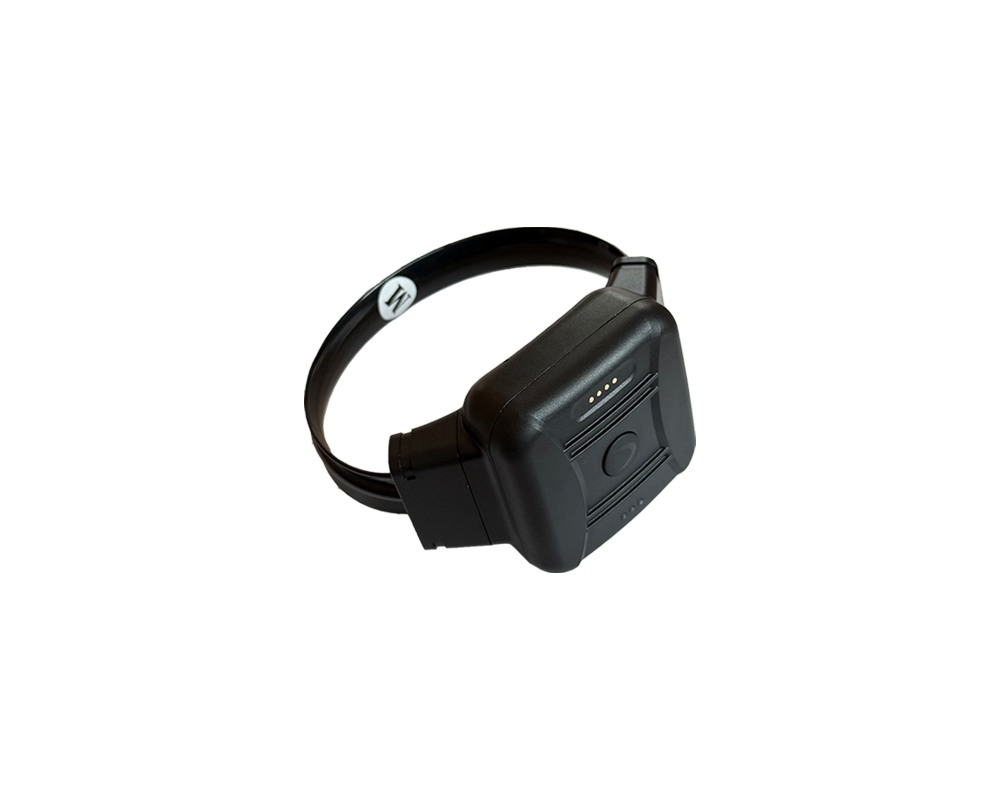
Major established suppliers in the U.S. market include BI Incorporated, SCRAM Systems (Alcohol Monitoring Systems), SuperCom, and Geosatis, among others—each with different mixes of alcohol, GPS, RF, and platform tooling. Newer entrants include REFINE Technology, which positions fiber-based strap and case integrity sensing on its one-piece supervisee hardware line (technical overview) as a contrast to legacy resistive tamper loops. This publication does not rank vendors for a specific RFP; it notes that tamper philosophy and escalation design should be evaluated together.
7. Lessons for EM programs — what agencies should change
- Post-incident transparency: After any major ankle monitor failure, publish a timeline: device alert timestamps, vendor acknowledgements, and dispatch entries (redacted as needed).
- Separate SLAs: Contract distinct response targets for tamper, strap, case, power, and communication-loss classes.
- Train for credibility: If electronic monitoring operators cancel alerts to reduce noise, log the reason code—future prosecutors and defense counsel will ask.
- High-risk matrices: Define objective triggers (charge category, prior absconding, weapon history) that change routing—not merely reporting interval.
- Evidence literacy: Florida’s EM recidivism research, often cited in NIJ-oriented summaries, reported roughly a 31% reduction in violent recidivism for monitored cohorts under that study’s definitions—useful as a population-level benchmark, not a guarantee about any individual device event.
Editor’s note: This is independent industry analysis, not legal advice. Verify all case facts against primary court and agency sources; tip lines and charges may update after publication.
FAQ
What happened in the Multnomah County ankle monitor case?
According to Hoodline’s April 9, 2026 summary, authorities sought Hector Carranza after he allegedly removed a court-ordered ankle monitor on March 21, 2026; a warrant was reported on March 23, 2026.
Why do people cut ankle monitors?
Motivations vary, but technically the act exploits the gap between strap integrity sensing, communication uptime, and how fast agencies convert alerts into field response.
How does GPS ankle bracelet tamper detection work?
Common methods include resistive strap loops, case sensors, and newer fiber-optic paths; each differs in false-tamper behavior and environmental sensitivity.
Does electronic monitoring stop reoffending by itself?
EM is a supervision tool; population studies (for example Florida-focused recidivism work summarized by NIJ) suggest compliance benefits, but hardware is only as strong as program design.
What should counties do after a high-profile ankle monitor escape?
Run a vendor-neutral after-action review: alert timestamps, operator actions, contract SLAs, and whether high-risk cohorts had appropriate escalation paths.