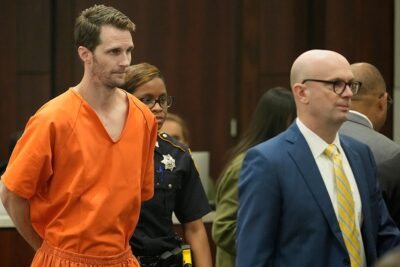
Two headlines from the same week tell the story of American correctional healthcare in 2026. In Kansas, the Department of Corrections signed an $88.9 million contract with VitalCore Health Strategies to provide medical services for 10,000 inmates across eight adult prisons. In Michigan, officials launched an investigation into the death of 28-year-old Khaira Howard at Huron Valley Correctional Facility — a woman scheduled to be paroled one day after she died.
Neither headline mentions wearable technology. But together they illustrate a structural gap in how American prisons manage inmate health: the systems designed to provide care are not the same systems designed to detect when care is needed. Billions of dollars flow into staffing contracts, medication budgets, and electronic health records. Almost nothing flows into continuous physiological monitoring that could flag a deteriorating patient before they become a corpse.
Table of Contents
- What Does Kansas’s $88.9 Million Buy — and What Doesn’t It Cover?
- What Happened at Huron Valley — and What We Don’t Know
- How Do Biometric Wristbands Work in Correctional Settings — and What’s the Evidence?
- Why Does the Current Healthcare Contract Model Keep Failing?
- What Are the Practical Challenges of Deploying Biometric Wristbands in Prisons?
- Where Does This Technology Fit in the Correctional Healthcare Stack?
What Does Kansas’s .9 Million Buy — and What Doesn’t It Cover?
The Kansas Department of Corrections contract with VitalCore Health Strategies, announced May 16, covers all medical services for approximately 10,000 adults across the Lansing, Hutchinson, El Dorado, Topeka, Ellsworth, Norton, Winfield, and Larned facilities, plus the Kansas Juvenile Correctional Complex in Topeka (approximately 200 juveniles). The contract terms:
- $88.9 million in the first fiscal year starting July 1, 2026
- 3.5% annual cost escalator (approximately $3 million per year increase)
- Two-year initial term with two optional two-year extensions (maximum six years through June 2032)
- Coverage includes onsite medical, offsite hospital care, outpatient surgery, dental, behavioral health, hepatitis C treatment, and electronic health records
- Staffed by 500 full-time equivalent employees providing 24/7/365 care
What the contract does not address is the detection gap. VitalCore’s scope — like every traditional correctional healthcare contract — assumes that medical needs are identified through scheduled sick calls, intake screenings, and officer welfare checks. The model depends on inmates reporting symptoms or staff visually identifying distress during rounds that may occur every 30 to 60 minutes.
The Kansas deal also carries a troubling backstory. Mississippi Today’s investigative series “Behind Bars, Beyond Care” documented that VitalCore denied medication to Mississippi inmates with hepatitis C and HIV, an untreated broken arm resulted in an amputation, and a delayed cancer screening led to a terminal diagnosis. Medical staff reportedly labeled inmates as “noncompliant” to justify sending them back to cells without treatment. Kansas officials said six other companies bid on the contract and that a separate $2.3 million arrangement with the University of Kansas Medical Center would provide independent oversight.
What Happened at Huron Valley — and What We Don’t Know
On May 13, 2026, 28-year-old Khaira Howard died at the Women’s Huron Valley Correctional Facility in Ypsilanti, Michigan. The Michigan Department of Corrections confirmed her death to CBS News Detroit. Records show Howard was scheduled to be paroled on May 12 — one day before she died.
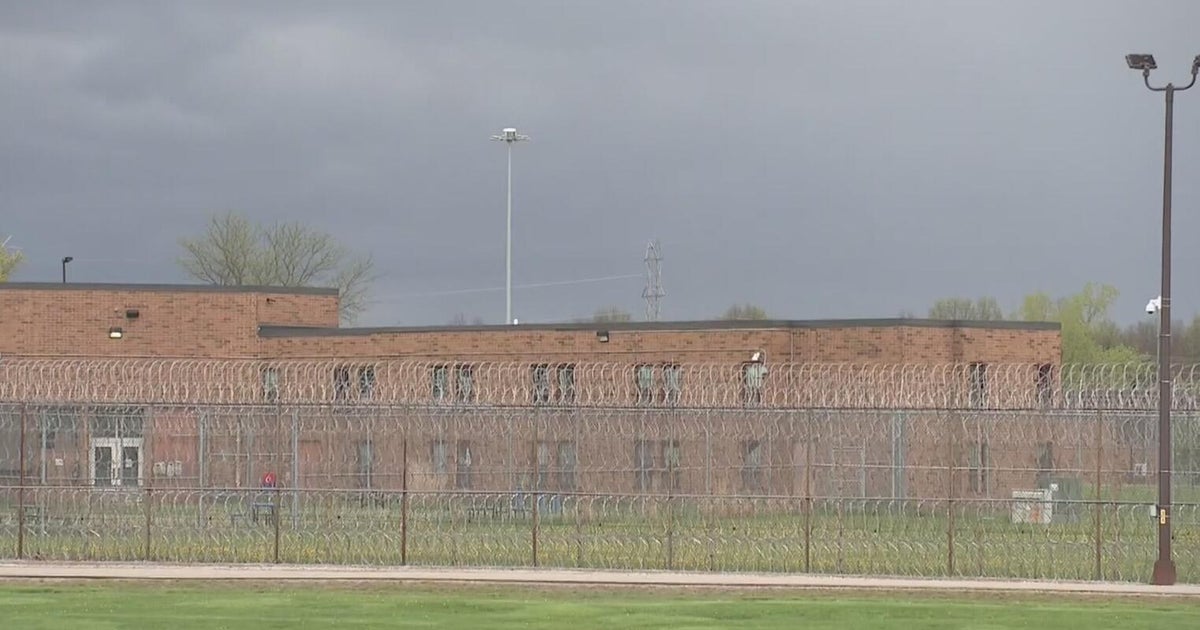
The cause of death remains unknown. MDOC stated that “life saving measures were initiated by onsite staff and EMS was called where they continued life saving measures upon arrival to the facility, but attempts were unsuccessful.” The department’s statement emphasizes “comprehensive processes and medical protocols for health emergencies” — but the fundamental question is whether Howard’s deterioration could have been detected earlier through continuous monitoring rather than periodic staff checks.
We do not know the specific medical circumstances of Howard’s death. What we know from national data is the pattern: the UCLA Law Behind Bars Data Project documented more than 15,000 prison deaths across 48 states between 2022 and 2024. Missouri’s in-custody deaths reached a record 139 in 2024 despite its prison population declining by 23% since 2018. Los Angeles County saw nine deaths in the first two months of 2026 alone.
How Do Biometric Wristbands Work in Correctional Settings — and What’s the Evidence?
Continuous biometric monitoring wristbands represent an emerging technology layer that sits between the healthcare provider (like VitalCore) and the inmate. Instead of waiting for symptoms to become visible during welfare checks, these devices track physiological indicators continuously and alert staff when thresholds indicate potential emergencies.
The most deployed system is 4Sight Labs’ OverWatch® platform, now used or in training across approximately 61 local jurisdictions in the United States. The technology monitors:
- Heart rate — detecting cardiac events, overdoses, and acute medical distress
- Blood oxygen saturation (SpO₂) — flagging respiratory depression before it becomes fatal
- Skin temperature — identifying infection, sepsis, or withdrawal symptoms
- Movement and activity — detecting falls, seizures, or prolonged immobility
When any metric crosses a configurable threshold, the system generates automated alerts to custody and medical staff through a centralized dashboard. Philadelphia’s jails now monitor people during their first five days of custody — the highest-risk period for overdose and withdrawal deaths — with 137 individuals actively monitored as of September 2025. Rockwall County Detention Center in Texas reported 48,926 hours of observation and 705 alerts generated since deploying the system in July 2024.

Why Does the Current Healthcare Contract Model Keep Failing?
The fundamental problem is architectural. Traditional correctional healthcare contracts — whether the $88.9 million Kansas deal or Missouri’s $212 million arrangement with Centurion Health — define success by service delivery metrics: number of sick calls processed, medication dispensed, intake screenings completed. They do not measure outcomes like mortality reduction.
Missouri’s case is instructive. Despite paying $212 million for prison healthcare, the state’s contract with Centurion Health contains no inmate mortality performance measures. When asked about this gap, the Missouri Department of Corrections director stated that mortality is “not in terms of the outcome” they measure. Kansas has attempted to address this by adding a $2.3 million independent oversight contract with the University of Kansas Medical Center — but oversight after the fact is fundamentally different from detection in real time.
The detection gap matters because the leading causes of in-custody death — cardiac events, overdose, respiratory failure, sepsis from untreated infection — produce measurable physiological warning signs hours before they become fatal. A heart rate dropping below 40 bpm at 2 a.m. in a cell block will not be discovered during a 6 a.m. welfare check. A SpO₂ reading falling below 90% from fentanyl-laced substances can kill within 15 minutes — long before any scheduled staff round.
What Are the Practical Challenges of Deploying Biometric Wristbands in Prisons?
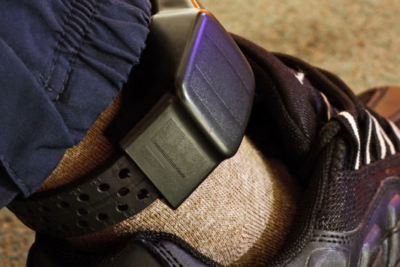
The technology is not without problems. Albuquerque’s Metropolitan Detention Center canceled its 4Sight Labs contract in April 2024 after experiencing Bluetooth connectivity failures, battery life issues (two-hour operational life), integration problems with jail management systems, and inmate comfort complaints. These are engineering challenges, not conceptual ones — and they mirror the evolution curve that GPS ankle monitors went through in the early 2000s before one-piece designs solved the reliability and comfort problems of two-piece systems.
The parallels to ankle monitor evolution are worth noting. Early GPS ankle monitors suffered from:
| Challenge | Early GPS Ankle Monitors (2005-2015) | Early Biometric Wristbands (2023-2026) |
|---|---|---|
| Battery life | 24-48 hours, requiring daily charging | 2-8 hours in some deployments |
| Connectivity | Frequent cellular dead zones | Bluetooth range and reliability issues |
| Comfort/compliance | Heavy, bulky two-piece systems (200-250g) | Skin irritation, sizing issues |
| False alarms | 15-30% tamper false positive rates | Motion artifact-induced vital sign false alerts |
| System integration | Incompatible with legacy monitoring centers | Incompatible with jail management systems |
The ankle monitor industry solved these problems through architectural innovation — multi-mode connectivity (BLE + WiFi + LTE), fiber optic tamper detection, and integrated one-piece designs that extended battery life from hours to weeks. Biometric wristband manufacturers are on a similar trajectory, and the jurisdictions that adopt early will shape the standards that late adopters inherit.
Where Does This Technology Fit in the Correctional Healthcare Stack?
Biometric wristbands do not replace healthcare providers. They function as a detection layer that sits between the inmate and the medical response system. The analogy in community corrections is the GPS ankle monitor: the device does not supervise the offender — the officer does. But without the device, the officer is blind between check-ins.
In a Kansas-style contract, VitalCore would still provide all medical services. But a biometric wristband layer would mean that the 500-person medical staff gets automated alerts when an inmate’s vital signs indicate a potential emergency — rather than discovering a medical crisis during a scheduled round. For Kansas’s 10,000 inmates across eight facilities, this represents a fundamentally different information flow.
The cost arithmetic also favors integration. A single wrongful death lawsuit against a state DOC routinely settles for $1-5 million. The 4Sight Labs OverWatch system typically costs $3-8 per inmate per day. For Kansas’s 10,000 inmates, that represents $30,000-$80,000 per day — or roughly $11-29 million per year. Against a base healthcare contract of $88.9 million and the litigation exposure of even a handful of preventable deaths, the economics are defensible.
For corrections administrators evaluating this technology category, the critical procurement questions are: What vital signs does the device monitor? What is the actual battery life under continuous monitoring? How does the device connect to the alerting system (Bluetooth range and reliability)? Can the system integrate with existing jail management and electronic health record platforms? And what is the false alert rate under realistic custody conditions — not laboratory settings?