
Editor’s note: This news analysis is written for electronic monitoring programme directors, court technologists, and vendor strategists. It summarises publicly posted Florida session materials on HB 277—not legal advice. Verify all mandates against enrolled statutes, administrative orders, and local probation rules before changing operations.
Lead: When Florida HB 277 takes effect on July 1, 2026, the Sunshine State will join a wave of jurisdictions treating domestic violence supervision as a systems problem—not a checkbox. The bill pairs broader protective-injunction reforms with two time-bound electronic monitoring pilots that implicitly assume GPS ankle monitor-class telemetry, victim-alert choreography, and staffing models that can absorb higher event volumes. In vendor briefings the bundle is already being shorthand-tagged as electronic monitoring Florida HB 277—statute, pilots, and hardware roadmaps in a single slide deck. For readers of Ankle Monitor Industry Report, the policy signal is unambiguous: procurement language that once said only “EM” must now specify how location is produced, how tamper alarms are adjudicated, and how quickly officers can act when geofences breach.
Table of Contents
- What Florida HB 277 changes on July 1, 2026
- From generic EM language to GPS-grade expectations
- Pinellas County and the Sixth Judicial Circuit pilots
- Technical requirements implied for GPS ankle monitor programmes
- Why Florida’s evidence base still matters
- Budget shockwaves: modelling nine-figure electronic monitoring scale
- Where the money actually goes
- Discovery, privacy, and defensible audit trails
- Staffing models under higher alert volumes
- How HB 277 fits the wider 2026 map
- Cellular sunset pressure on every ankle monitor fleet
- Vendor landscape: how agencies should score OEMs
- RFP clauses that survive the first revocation hearing
- NIJ standards as a neutral evaluation spine
- Bottom line for EM programme leaders
- FAQ
- What does Florida HB 277 require for electronic monitoring?
- When do the Pinellas and Sixth Circuit pilots start?
- Does HB 277 replace local ankle monitor contracts?
- How should agencies interpret $150 million cost chatter?
- Where can I read more neutral research on EM outcomes?
What Florida HB 277 changes on July 1, 2026
According to the Florida Senate Criminal Justice Committee’s published summary of CS/CS/HB 277 (Domestic Violence and Protective Injunctions), the measure tightens several criminal and victim-support statutes: reclassification pathways for repeat domestic violence offences, expanded factors judges may weigh before granting injunctions (including threats to pets and military protective orders), higher relocation-assistance caps, and a requirement that the Florida Department of Law Enforcement capture dating- and sexual-violence injunctions in the statewide verification database.
Nested inside those headlines is the equipment story. The same summary describes new electronic monitoring pilot authorities that let—and in defined threat scenarios require—courts to order supervision hardware as a probation condition for qualifying defendants. That structure matters for any county GPS ankle monitor roadmap: Florida is no longer debating whether straps belong in the toolbox; it is debating which defendants wear them, which circuits pilot first, and what evidentiary record supervisors must produce when victims or prosecutors challenge compliance.

From generic EM language to GPS-grade expectations
Statutory text that authorises electronic monitoring without defining fix cadence leaves counties vulnerable to RFP disputes. Domestic-violence dockets, however, usually assume continuous track histories—because exclusion zones and approach alerts depend on them. Programme architects should therefore read HB 277 alongside their existing ankle monitor contracts: if a vendor cannot document GPS sampling intervals, geofence latency, and escalation SLAs, the courtroom—not the help desk—will eventually ask why.
Pinellas County and the Sixth Judicial Circuit pilots
The Senate summary outlines two parallel pilots, each running July 1, 2026 through June 30, 2028:
- Pinellas County — a misdemeanor domestic violence and protective-injunction lane where courts may order electronic monitoring during probation when a no-contact order is active, with a mandatory monitoring condition when judges find clear and convincing evidence of a continuing threat of violence or physical harm.
- Sixth Judicial Circuit — a felony domestic violence and felony injunction-violation lane with similar discretionary and mandatory ordering logic.
For additional context, see the RAND Corporation.
For vendor field teams, the geography is a feature, not a bug. Two circuits with distinct caseload mixes generate comparable telemetry stress tests—urban versus suburban density, alternative housing patterns, and different probation office workflows—before any statewide scaling conversation. Monitoring centres should treat the window as a live acceptance test for alert volumes, not a marketing tour.

Technical requirements implied for GPS ankle monitor programmes
Even when statutes avoid engineering verbs, DV use cases telegraph three technical families:
- Location integrity — Agencies typically expect GNSS fixes supplemented by assisted modes where urban canyons degrade signals. NIJ’s historical framing—often cited as 10 m / 30 m accuracy discussion bands for location-based supervision—gives procurement officers neutral benchmarks when comparing vendor datasheets.
- Tamper adjudication — Courts react poorly to alert storms. Programmes need written definitions of true versus false tamper events, strap-lift versus cut attempts, and docked charging versus removal. Our ankle monitoring systematic review of evidence and outcomes underscores why measurement methodology belongs in the contract, not in oral folklore.
- Victim notification — Exclusion buffers and proximity warnings assume reliable backhaul, authenticated mobile endpoints for protected parties, and audit logs that survive evidentiary scrutiny. When vendor supervision stacks integrate with statewide injunction databases, latency budgets tighten further.
Why Florida’s evidence base still matters
Florida-anchored research frequently surfaces in national briefings on supervision outcomes. Analysts still cite roughly a 31% reduction in recidivism risk for electronically monitored cohorts in landmark Florida studies—figures often repeated when legislatures justify new GPS programme spending. Readers should pair that headline effect size with the nuanced effect heterogeneity documented in systematic reviews rather than treating any single percentage as a guarantee for every offence class.
Budget shockwaves: modelling nine-figure electronic monitoring scale
The pilot clauses in HB 277 cap geography and calendar, but they do not cap imagination. Once dockets normalise GPS supervision for high-risk domestic violence defendants, counties will ask what replication costs statewide. Commentary circulating after the 2026 session—aggregating devices, LTE-class connectivity, 24/7 monitoring-staff rotations, victim-notification licences, and integration work—has repeatedly floated more than 150 million dollars as an order-of-magnitude envelope for Florida-scale deployment. Treat any number as directional until appropriations worksheets and agency LBB requests publish line items; the point for industry is simpler: electronic monitoring is now a budget centre, not a marginal add-on.
Where the money actually goes
Hardware line items are only the opening bid. Full programme TCO for statewide EM includes spare straps and docks, reverse-logistics when defendants are remanded, overtime for analysts reviewing geofence hits during holidays, and cybersecurity reviews when victim portals touch cloud APIs. Pilots also burn management time: rewriting standard probation conditions, training judges’ staff on what a GPS ankle monitor alert means in plain English, and negotiating data-sharing agreements between monitoring vendors and law-enforcement record systems. Counties that budget devices alone will discover the deficit mid-pilot.
For additional context, see the Prison Policy Initiative.
Discovery, privacy, and defensible audit trails
Domestic violence cases generate discovery motions faster than property crimes. Defence counsel will ask how location fixes were calculated, whether smoothing algorithms edited raw tracks, and which employees acknowledged alerts. Programmes therefore need immutable audit logs—device event, server receipt, analyst action, court notification—that can be reproduced months later. Privacy officers, meanwhile, must reconcile victim-facing apps with Florida’s public-records culture: not every telemetry field belongs in a downloadable PDF. Treating supervision telemetry as regulated criminal-justice information, not generic IT logs, avoids both contempt exposure and headline breaches.
Staffing models under higher alert volumes
When statutes push mandatory monitoring for threat findings, queue depth spikes during evenings and weekends—exactly when staffing is thinnest. Supervision executives should model analyst headcount against expected geofence events per hundred defendants, not against legacy caseload ratios built for RF home-detention beacons. If the model shows queues longer than fifteen minutes for tier-one domestic-safety alerts, the ankle monitor programme is underbuilt even if every device boots.
How HB 277 fits the wider 2026 map
Florida HB 277 did not emerge in isolation. At least fourteen states are actively expanding or restructuring GPS programmes this cycle—mixing pretrial, post-conviction, and specialised dockets. Our electronic monitoring adoption: 2026 state legislative update tracks how statutory language is converging on continuous tracking, cellular modernisation, and quantified reliability expectations. Florida’s domestic-violence pilots add another data point: politically visible dockets drive faster hardware refresh timelines than low-profile caseloads.
Cellular sunset pressure on every ankle monitor fleet
Even absent new statutes, carriers are retiring narrowband generations. An ankle-worn GPS unit that cannot maintain resilient backhaul during volatile supervision events is a liability. Programme officers should synchronise three clocks—HB 277 effective dates, carrier sunset milestones, and vendor firmware certification—to avoid stranding devices in the field.
Vendor landscape: how agencies should score OEMs
Procurement teams are moving from brand familiarity to demonstrable subsystem performance. Established multinationals such as BI Incorporated, SCRAM Systems, SuperCom, and Geosatis remain fixtures in North American RFPs, while newer OEMs—including REFINE Technology (CO-EYE)—are bidding on many of the same metrics (strap integrity sensing, cellular generation, one-piece versus tethered architectures). Regardless of vendor size, score sheets should require independent lab evidence for tamper channels, open APIs for victim-alert integrations, and documented officer workflows for breach escalation.
RFP clauses that survive the first revocation hearing
Ask vendors to attach sample exports of raw fix streams alongside human-readable maps, define who pays for strap swaps after saltwater exposure, and specify maximum allowable cloud latency between device-generated breach packets and analyst workstations. For domestic violence dockets, add a schedule for victim hotline drills—proving the electronic monitoring stack can push test alerts to the same endpoints used in production. Generic warranties buckle the first time a judge compares vendor marketing slides to server timestamps.
NIJ standards as a neutral evaluation spine
The National Institute of Justice has long framed electronic monitoring as a systems engineering problem: power budgets, RF environments, accuracy expectations, and officer-interface usability. Even when Florida statutes do not cite NIJ by name, programme architects can lift test methodologies from NIJ location-tracking literature to score competing GPS ankle monitor bids without appearing to favour a single OEM. The goal is not checkbox compliance with a decades-old PDF—it is to import discipline: repeatable tests, disclosed limitations, and honest uncertainty bands when satellite geometry fails.
Pair those engineering frames with the outcome evidence synthesised for policymakers—our systematic review overview remains a readable on-ramp—so that procurement weights reflect both what devices can do and what studies say happens after straps are fitted. Florida’s recurring citation of large effect sizes in older EM evaluations is politically powerful but methodologically coarse; modern pilots should collect local metrics (rearrest, technical violations, victim-reported safety) alongside vendor KPIs.
For additional context, see the American Probation and Parole Association.
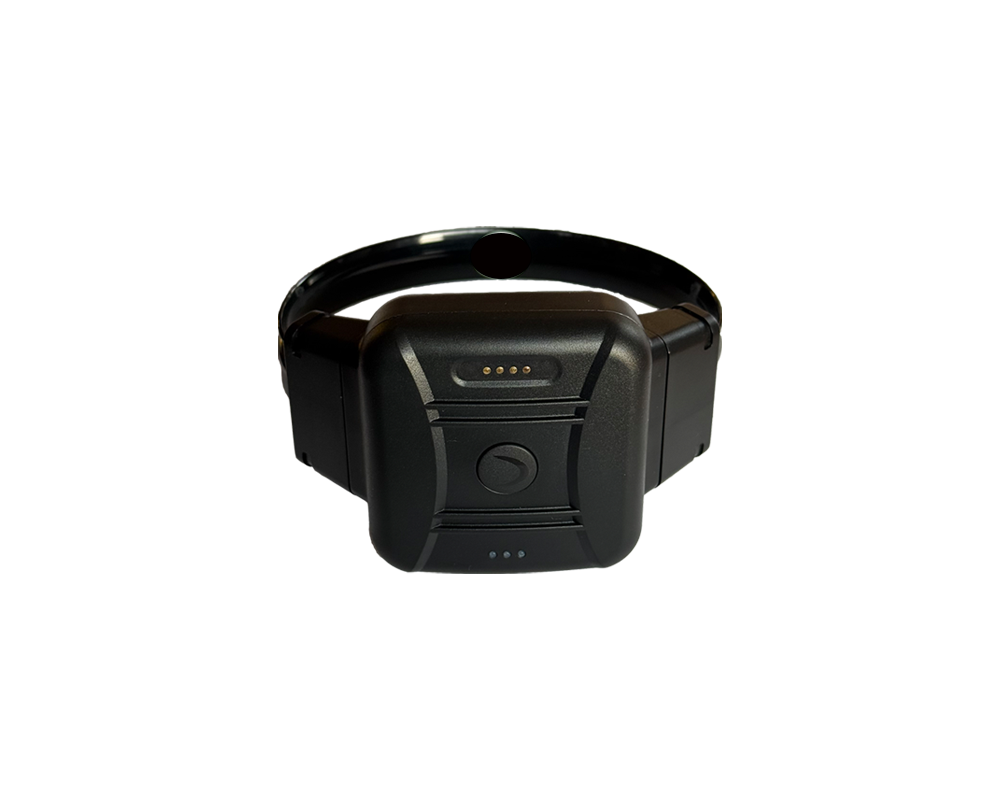
Manufacturers can advertise “real-time” maps, but judges ask for timestamps. Programme directors should therefore embed NIJ-era architecture discipline—device, monitoring centre, vendor data services, officer interface—into every RFP, then map HB 277 obligations onto each subsystem. For complementary implementation context on supervised release environments, see REFINE Technology’s house arrest and home detention monitoring guide on the equipment manufacturer’s commercial site; it is vendor-authored but useful as a checklist of operational questions even when evaluators remain brand-agnostic.
Bottom line for EM programme leaders
Florida HB 277 is as much an implementation brief as a criminal-law update. Pilots in Pinellas County and the Sixth Judicial Circuit give vendors and agencies a two-year window to prove that GPS ankle monitor programmes can handle elevated domestic-violence workloads without drowning courts in false alerts. The Sunshine State’s move also reinforces a national theme: electronic monitoring is now specified, budgeted, and politically visible—exactly the environment where neutral standards and transparent metrics separate sustainable programmes from pilot theatre.
FAQ
What does Florida HB 277 require for electronic monitoring?
The enrolled policy package described in public Senate summaries creates pilot-era authorities for ordering GPS-class supervision in defined domestic-violence and injunction contexts, with mandatory monitoring when courts make specific threat findings. Always confirm the final chapter text.
When do the Pinellas and Sixth Circuit pilots start?
According to the same summaries, both pilot tracks begin July 1, 2026, and sunset June 30, 2028, unless extended by future legislation.
Does HB 277 replace local ankle monitor contracts?
No—counties still negotiate service agreements. The statute changes when courts may order supervision, which indirectly forces contract upgrades to match GPS, tamper, and victim-notification workloads.
How should agencies interpret 0 million cost chatter?
Treat it as scenario planning, not an appropriation. Combine device counts, daily monitoring fees, IT integration, and training before accepting any headline figure.
Where can I read more neutral research on EM outcomes?
Start with NIJ’s location-based tracking literature and our linked systematic review primer on ankle monitoring evidence—then loop results back into your RFP scoring weights.